



Bikepackia
EuroVelo · Belgium

Ride Belgium, coast to Ardennes.

Five signed EuroVelos cross Belgium — the Meuse Cycle Route up the river, the Pilgrims Route across Wallonia, the flat North Sea coast and the Via Romea diagonal through Brussels. Explore them, then send one straight to the planner.

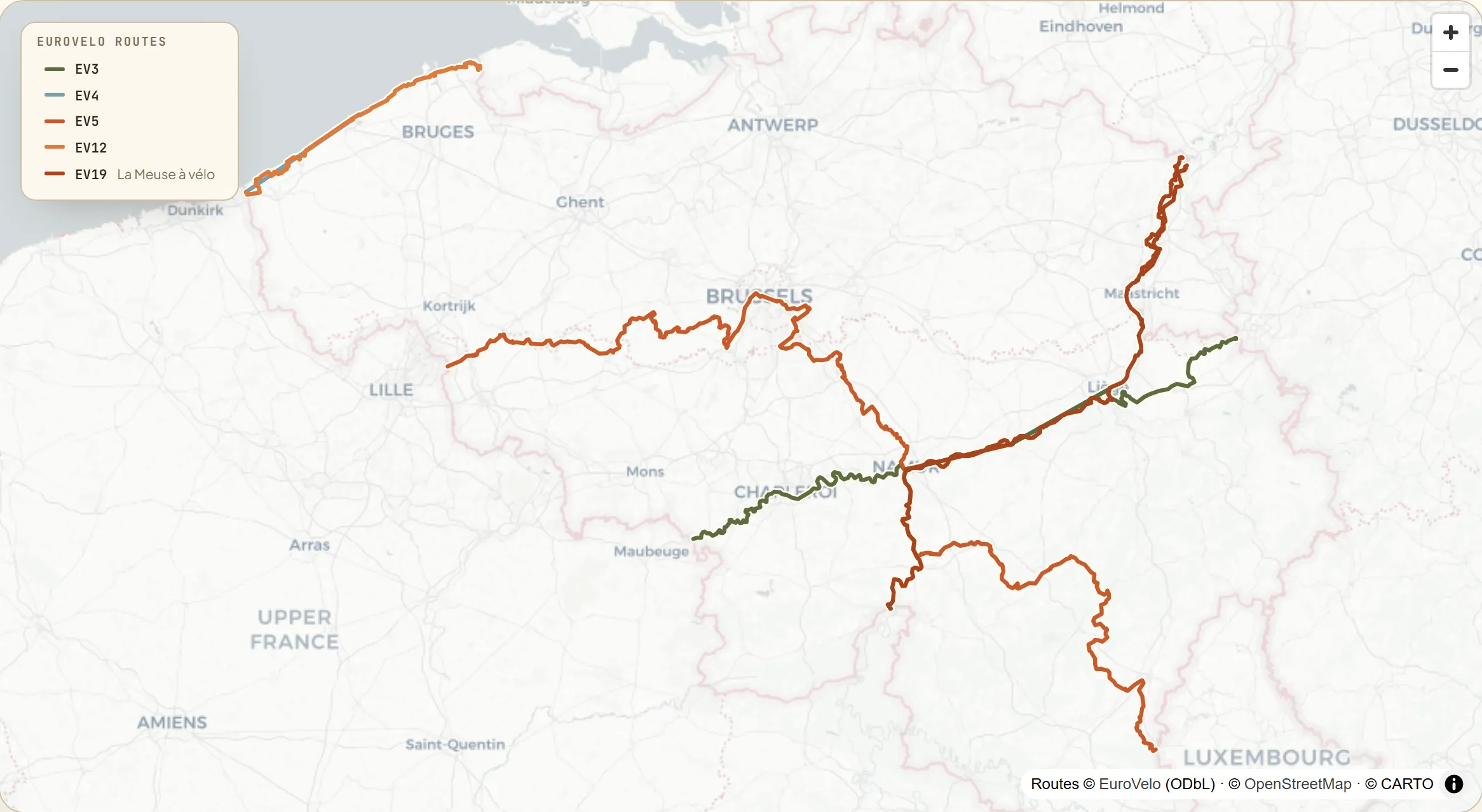
Map of Belgium with five signed EuroVelo routes — EV3 the Pilgrims Route across Wallonia from the German border to Maubeuge, EV4 and EV12 sharing the North Sea coast from De Panne to Knokke-Heist, EV5 the Via Romea diagonal through Brussels, and EV19 La Meuse à vélo up the Meuse from Dinant to Visé.
5
national routes
1,000+ km
EuroVelo signed
1,350 km
RAVeL greenways
Why Belgium

Two regions, two backbones.

Belgium has no single national véloroute brand — it splits in two. Wallonia rides the RAVeL, 1,350 km of car-free greenways on old railways and towpaths; Flanders rides its dense numbered node network and the flat, fully built coastal Kustroute. The headline is La Meuse à vélo, the first route fully waymarked in Wallonia, following the Meuse past four fortified cities — Dinant, Namur, Huy, Liège. Scenery runs from the North Sea dunes and the Zwin to the Grand-Place of Brussels and the Ardennes.

The mapHover a route to trace it

Five EuroVelos across Belgium.

Belgium's five signed EuroVelos, clipped from the official GPX tracks. Hover a line or its legend entry to trace it — the Meuse and Pilgrims routes through Wallonia, the co-signed North Sea coast, and the Via Romea diagonal through Brussels — then tap through to the route.

Interactive map loads as you scroll
National & regional infoBackground, not booking

The bodies behind the network.

The national and regional organisations that coordinate, sign and map Belgium's cycle routes — here for context and credibility. No need to leave to plan: your route and every place to stay come together in the Bikepackia planner.

The routesTap a card to learn more

Five ways through Belgium.

Citadel of Namur over the Meuse
Photo: LBM1948 / Wikimedia Commons (CC BY-SA 4.0)

Pilgrims Route

GERMAN BORDER (AACHEN)MAUBEUGE (FR)

The Walloon east–west spine — into the hilly Land of Herve, then flat-and-easy down the Meuse and Sambre RAVeL through four river cities. From the German border near Aachen it climbs to Liège, then follows the Meuse to Huy and Namur before turning west on the Sambre RAVeL through Charleroi and Thuin to the French border at Maubeuge. The start over the Land of Herve is the hard part — EuroVelo grades the Liège–Huy leg Expert; the river valleys are largely car-free. The ~200 km is rounded; the section-sum is roughly 222 km.

200 km3–5 daysModerate
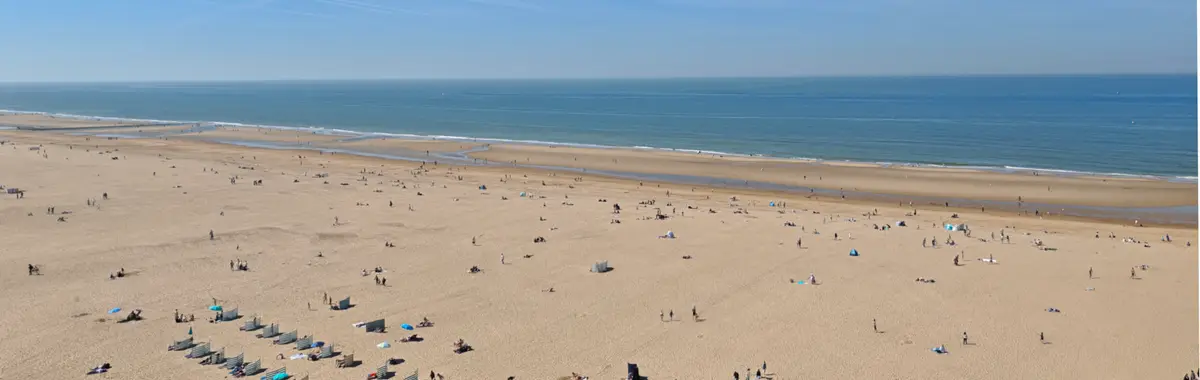
North Sea promenade, Oostende
Photo: Reda Kerbush / Wikimedia Commons (CC BY-SA 4.0)

Central Europe Route

DE PANNE (FR BORDER)KNOKKE-HEIST (NL BORDER)

The flattest, easiest Belgian EuroVelo — the whole North Sea coast on one fully paved seafront cycleway. From De Panne at the French border it runs the segregated Kustroute east through Nieuwpoort and Oostende to Knokke-Heist at the Dutch border, no climbs the whole way. Here the coast is one leg of a Europe-crossing line that runs from Roscoff to Kyiv — the same ~85 km corridor is co-signed as EV12, the North Sea loop, so look for both numbers on the signs. The section-sum is 85.2 km.

85 km1–2 daysEasy
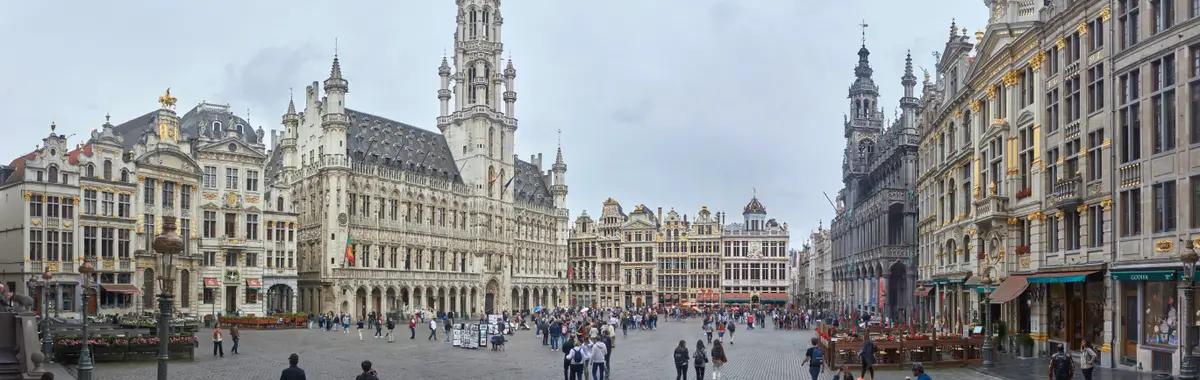
Grand-Place, Brussels
Photo: Celuici / Wikimedia Commons (CC BY-SA 4.0)

Via Romea (Francigena)

ROUBAIX (FR BORDER)MARTELANGE (LU BORDER)

The cross-country diagonal — the only EuroVelo through Brussels and across all three regions. From Roubaix on the French border it threads the Flemish canals and node network to the capital, past the Grand-Place and out through the Sonian Forest, then climbs the Condroz and the Ourthe valley to Martelange on the Luxembourg border. Flat in the Flemish north-west, genuinely hilly through the Condroz and Ardennes finish — EuroVelo grades one early section Expert. EuroVelo gives the in-Belgium length as ~400 km over 10 sections.

400 km5–8 daysModerate
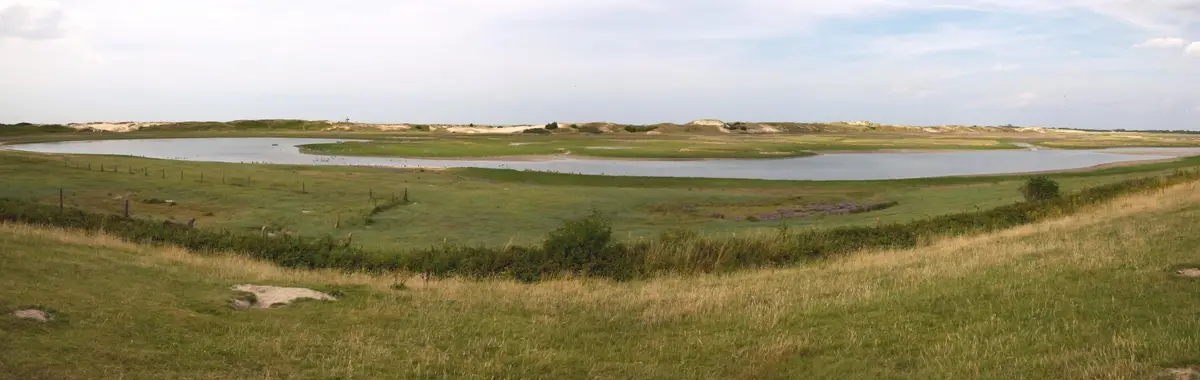
Zwin nature reserve, Knokke-Heist
Photo: Paul Hermans / Wikimedia Commons (CC BY-SA 3.0)

North Sea Cycle Route

KNOKKE-HEIST (NL BORDER)DE PANNE (FR BORDER)

The North Sea loop along the Belgian coast — the same ~85 km Kustroute as EV4, signed the opposite way as part of a seven-country circuit of the North Sea. From Knokke-Heist at the Dutch border, beside the tidal Zwin nature reserve, it runs west through Oostende and Nieuwpoort to De Panne at the French border. Flat, fully developed, segregated seafront the whole way — the easiest coast riding in the country. EuroVelo lists 85.2 km across two sections (the EV12 page rounds it to 90 km).

85 km1–2 daysEasy
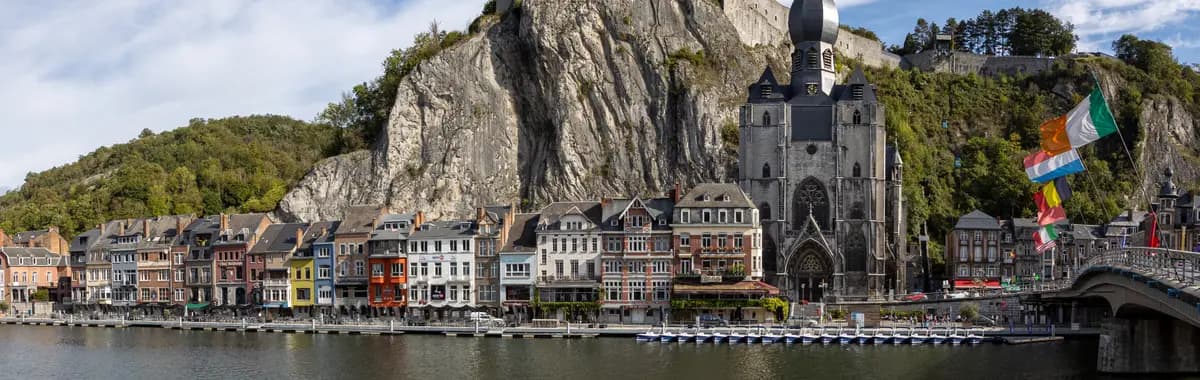
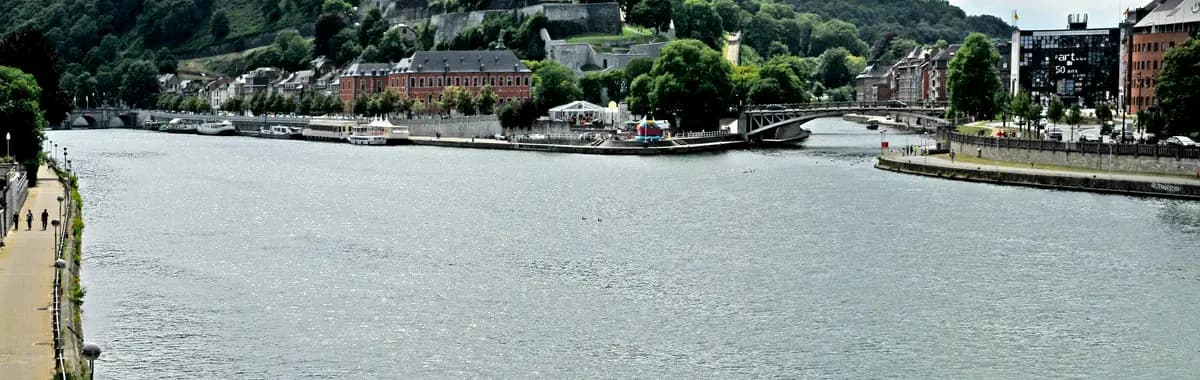
Citadel of Dinant on the Meuse
Photo: Superbass / Wikimedia Commons (CC BY-SA 4.0)

Meuse Cycle Route

La Meuse à véloDINANTVISÉ

Belgium's signature river ride — flat, car-free, the most finished long-distance route in the country. La Meuse à vélo follows the Meuse RAVeL towpath from Dinant, under its clifftop citadel, north past four fortified cities — Namur, Huy, Liège — to Visé near the Dutch border. The first long-distance route fully signposted in Wallonia, family-friendly along the river the whole way. The card distance is the ~150 km Walloon spine to Visé; after Visé the route splits east-bank or west through Belgian Limburg, taking the all-Belgium figure to about 225 km.

150 km2–4 daysEasy
Before you rideBelgium, the practical bits

What every bikepacker asks about Belgium.

Is wild camping allowed in Belgium?

No. True wild camping is illegal, with the rules set region by region across Flanders, Wallonia and Brussels; an unauthorised overnight stay counts as trespass under nature-conservation law and fines run roughly €50–€350. There is no France-style tolerated one-night bivouac right. Legal alternatives do exist for cyclists: Wallonia has designated forest bivouac zones where you may pitch a couple of tents for one night, and Welcome To My Garden is a free Belgian network where hosts let only hikers and cyclists camp in their garden for a night. A federal wild-camping-zones pilot launches in 2026 (12 sites, registration, leave-no-trace) — new and worth checking. Otherwise, use campsites.

Which season is best for bikepacking Belgium?

April to October, with May to September the sweet spot for stable weather and long daylight. Spring sits around 16–22 °C, summer 22–27 °C, and September–October 10–20 °C for crisp Ardennes riding with fewer crowds. Avoid December–February (cold near 0 °C, short days) and the peak July–August crowding in Bruges and on the coast. Rain is year-round, so pack waterproofs whatever the month. The flat coast and Flanders ride well across the whole window; the hilly Ardennes in the south-east is best from late spring to early autumn.

Any cycling regulations I should know about?

A few worth knowing. Helmets are not mandatory on a normal bike (recommended) but are compulsory on a speed pedelec, the fast 25–45 km/h e-bikes; a reflective vest is recommended, not required. After dusk or in poor visibility you need a white front and red rear light, and your bike must have front and rear brakes, side and pedal reflectors, and a bell audible from 20 m. Ride on the right and use the cycle path or lane where one exists — pavement riding is only allowed for children under 10. No phone calls or texting while riding. Running a red light is a third-degree offence around €165; ignoring a red at a railway crossing runs €400–€5,000.

What should I expect as a bikepacker in Belgium?

Five signed EuroVelos over a small, very cycle-friendly country, on two regional backbones: Wallonia's RAVeL (1,350 km of car-free ex-rail and towpath greenways) and the Flanders cycle node network with its nine Iconic Cycle Routes. Terrain splits cleanly — flat coast and Flanders in the north, rolling Meuse and Sambre valleys and the hilly Ardennes in the south-east. EuroVelo publishes a development-status legend, not a car-free percentage. Cyclist-welcome labels are 'Bienvenue Vélo' in Wallonia and 'Flanders by Bike' / Bed+Bike in Flanders and East Belgium — two regional schemes, no single national one. Bikes ride trains (SNCB/NMBS) with a bike supplement, no reservation, subject to space and limited in weekday rush hours; folded bikes go free. Resupply is dense everywhere — the country is small and urbanised, and even the Ardennes towns are close-spaced.

READY WHEN YOU ARE

Pick the route. We'll plan the rest.

Drop a EuroVelo into the Bikepackia planner and turn the line on the map into rideable days — surface-aware routing, elevation, water, food and a bed every night.