

Bikepackia
EuroVelo · Czech Republic

Ride the river trails of Bohemia and Moravia.

Four signed EuroVelos cross the Czech Republic — the long Central Europe Route from the German border to Poland, the Sun Route up the Vltava through Český Krumlov and Prague, the Baltic–Adriatic down Moravia past Olomouc and Brno, and the 800 km Iron Curtain Trail along the frontier. All ride Czechia's named river trails and national cycle network. Explore them, then send one straight to the planner.

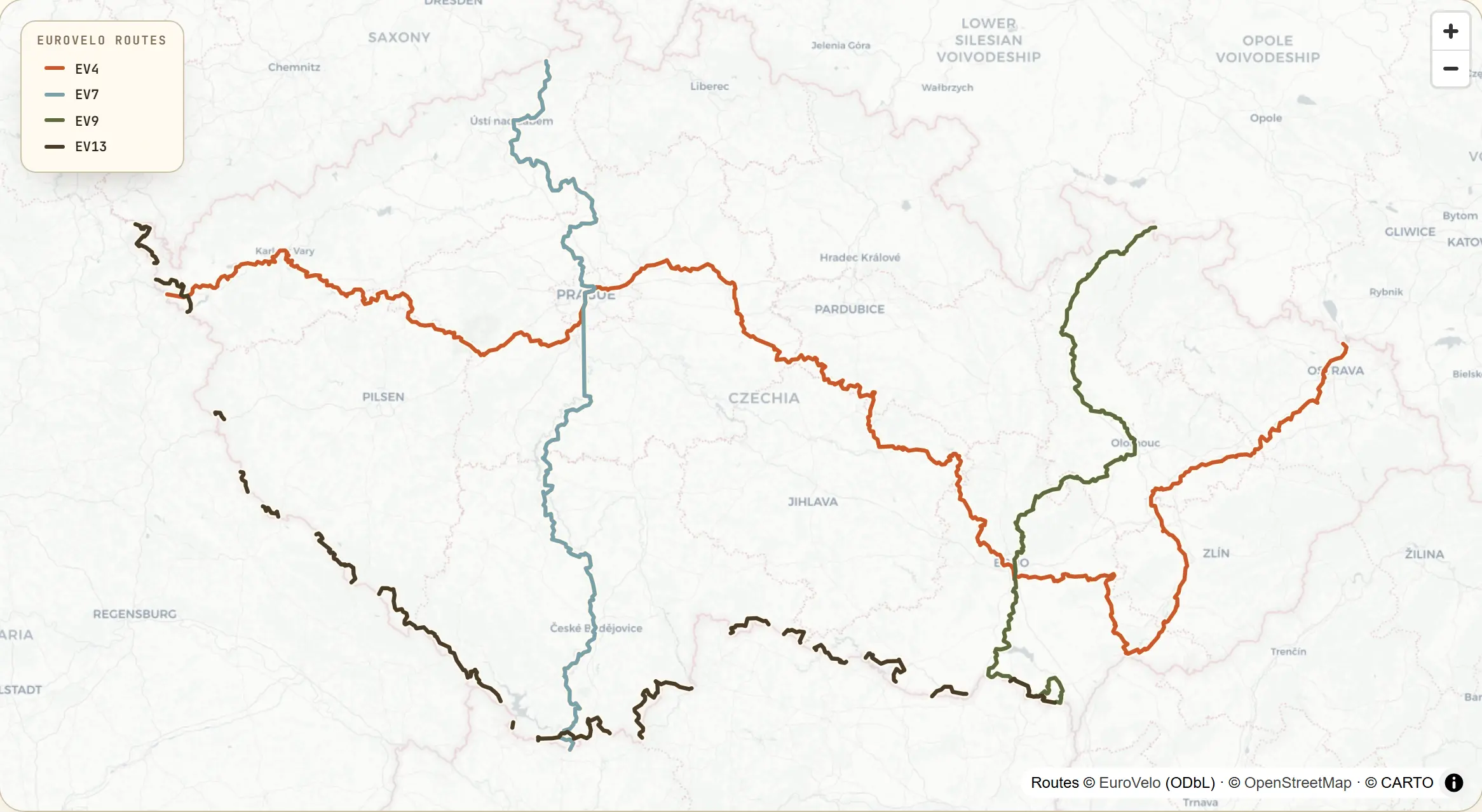
Map of the Czech Republic with four signed EuroVelo routes — the Central Europe Route (EV4) on the long diagonal from Cheb on the German border through Prague and Brno to Ostrava, the Sun Route (EV7) up the Vltava from the Austrian border through Český Krumlov and Prague then down the Elbe to Germany, the Baltic–Adriatic (EV9) down Moravia from the Polish border through Olomouc and Brno to the Austrian border, and the Iron Curtain Trail (EV13) hugging the western and southern frontier to Břeclav.
4
national routes
~2,490 km
EuroVelo signed
Cyklisté vítáni
cyclists welcome
Why Czech Republic

Four EuroVelos on the Czech river trails.

The Czech Republic has no single EuroVelo brand on the ground — instead the four routes ride the národní cyklotrasy, the country's numbered national cycle network, coordinated by Partnerství, o.p.s., the national EuroVelo body. The traffic-free backbone is built from river trails and greenways: the Vltava (Moldau) Cycle Route and the Labe (Elbe) River Trail through Prague, the Ohře (Eger) River Trail in the west, and the Morava River Trail down Moravia.

For a bed at the end of the day, look for the Cyklisté vítáni (Cyclists Welcome) label — the Czech cyclist-friendly accreditation for accommodation, cafés and bike services on-route. The signature ride is the Vltava on EuroVelo 7, down from the South-Bohemian forests through UNESCO-listed Český Krumlov and the Hluboká chateau to Prague. The scenery spans the Karlovy Vary spa valleys and Karlštejn castle, the sandstone gorges of Bohemian-Saxon Switzerland on the Elbe, the Jeseníky mountains and the Moravian Karst caves, and the Pálava vineyards and Lednice-Valtice châteaux of South Moravia.

The mapHover a route to trace it

Four EuroVelos across Czechia.

The Czech Republic's four signed EuroVelos, clipped from the official GPX tracks. Hover a line or its legend entry to trace it — the Central Europe Route on the long cross-country diagonal, the Sun Route up the Vltava and down the Elbe, the Baltic–Adriatic down Moravia, and the Iron Curtain Trail along the frontier — then tap through to the route.

Interactive map loads as you scroll
National & regional infoBackground, not booking

The bodies behind the network.

The Czech cycle network is coordinated by Partnerství, o.p.s., the national EuroVelo body, with the tourism agency and the cyclist-welcome scheme behind the named river trails the EuroVelos map onto. It's here for context and credibility. No need to leave to plan: your route and every place to stay come together in the Bikepackia planner.

The routesTap a card to learn more

Four ways across Czechia.

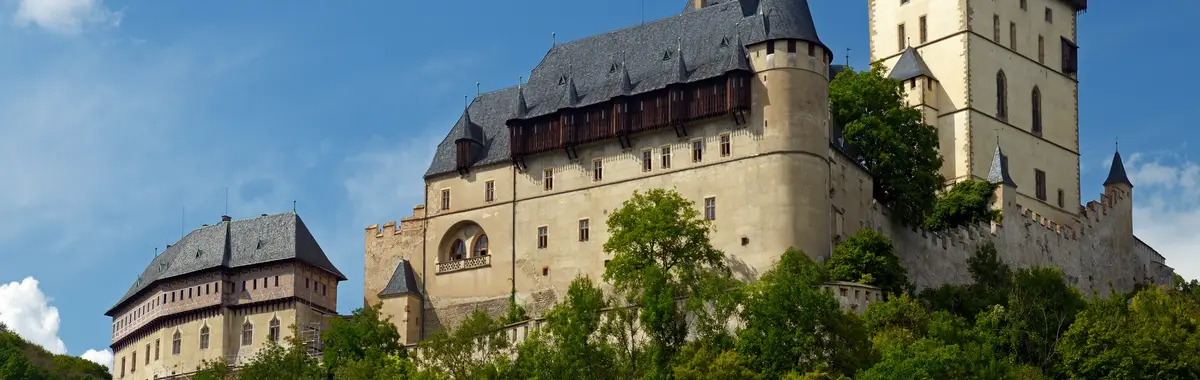
Karlštejn Castle above the Berounka
Photo: Вволасенко / Wikimedia Commons (CC BY-SA 3.0)

Central Europe Route

POMEZÍ NAD OHŘÍBOHUMÍN

The long cross-country diagonal, and the most climbing of the four — a stitch-up of named river trails with no single Czech name. From Pomezí nad Ohří on the German border it follows the Ohře (Eger) River Trail through the Karlovy Vary spa valleys, the Berounka-Střela greenway past Karlštejn castle to Prague, then the Elbe and Morava trails through Brno and Austerlitz to Bohumín on the Polish border by Ostrava. Moderate: moderately hilly Bohemian and Moravian uplands — about 1,000 m of climb per 100 km, over 90 % paved — but no high-mountain passes. The Czech national portal gives 912 km.

912 km12–16 daysModerate
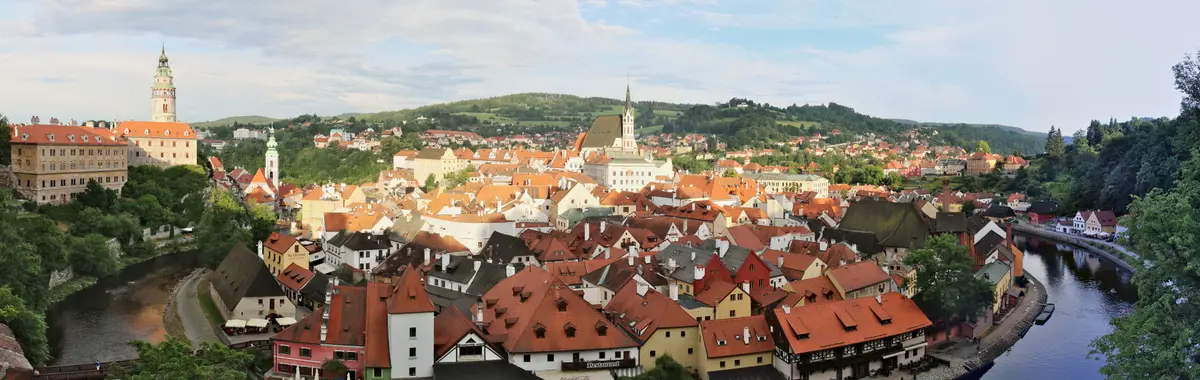
Český Krumlov on the Vltava
Photo: Ingo Mehling / Wikimedia Commons (CC BY-SA 4.0)

Sun Route

VYŠŠÍ BRODHŘENSKO

Czechia's best-loved river ride — up the Vltava, then down the Elbe, on the country's two most mature signed trails. From Vyšší Brod on the Austrian border it climbs the Vltava (Moldau) Cycle Route through UNESCO-listed Český Krumlov, the Hluboká chateau and České Budějovice to Prague, then follows the Labe (Elbe) River Trail past Mělník, Terezín and the Porta Bohemica through the Bohemian-Saxon Switzerland gorges to Hřensko on the German border. Moderate: mostly flat-to-gentle river riding with rolling Bohemian-uplands link sections — about 5,400 m of climb over the route. Around 452 km across Czechia.

452 km7–10 daysModerate
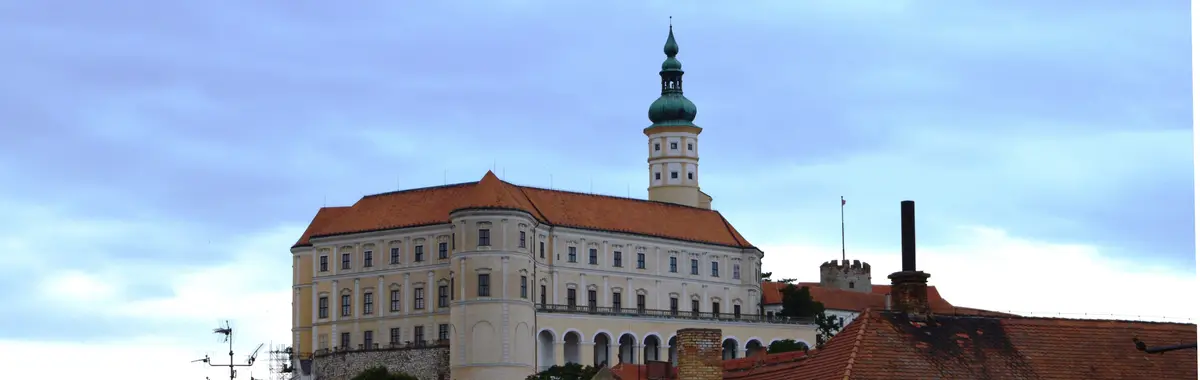
Mikulov below the Pálava hills
Photo: Scotch Mist / Wikimedia Commons (CC BY-SA 4.0)

Baltic – Adriatic

MIKULOVICEBŘECLAV

The Moravian north–south line — a hilly mountain entry, then flat once past Brno. From Mikulovice on the Polish border in the Jeseníky mountains it descends through UNESCO-listed Olomouc and the Moravian Karst caves to Brno, then runs the Morava floodplains past Mikulov and the Pálava vineyards to Břeclav on the Austrian border. Moderate: a front-loaded Jeseníky climb in the north, then mostly flat through the Moravian lowlands. EuroVelo publishes no clean Czech-only figure, but this single-region Moravian line runs around 330 km — far shorter than the cross-country EV4, and nothing like the widely-quoted 550 km that spans Austria and Slovenia.

330 km4–6 daysModerate
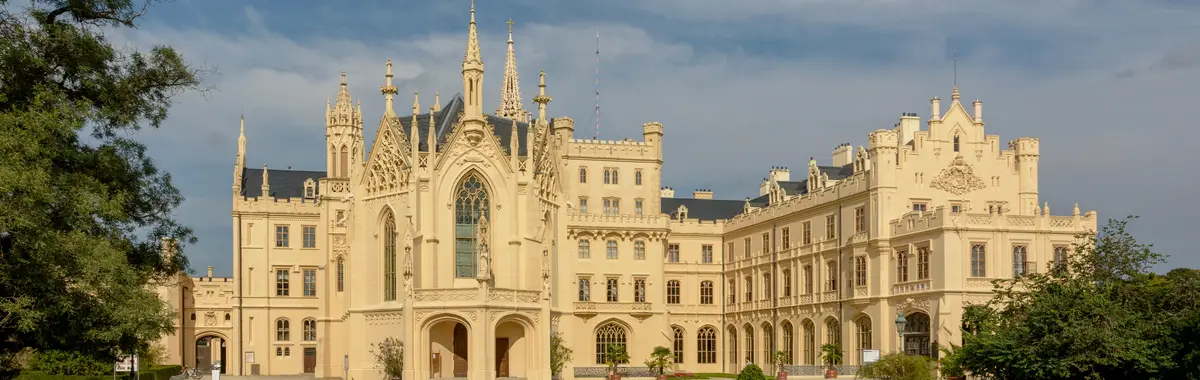
Lednice Castle in the Lednice-Valtice landscape
Photo: Henry Kellner / Wikimedia Commons (CC BY-SA 4.0)

Iron Curtain Trail

GERMAN BORDER (BOHEMIAN FOREST)BŘECLAV

The 800 km Cold-War frontier arc — fully signposted, and largely traffic-free on former military patrol roads. From the German border in the Bohemian Forest (Šumava) it hugs the western and southern frontier through the Podyjí national park and Znojmo, then the South-Moravia border past Mikulov and the UNESCO Lednice-Valtice châteaux to Břeclav on the Austrian border. Moderate: rolling border country through the Bohemian Forest and the South-Moravia hills, with no high-mountain passes — EuroVelo rates the Czech section Medium and frames it as two amazing weeks. EuroVelo states 800 km across Czechia.

800 km12–16 daysModerate
Before you rideCzech Republic, the practical bits

What every bikepacker asks about Czechia.

Is wild camping allowed in the Czech Republic?

Generally no. By law you may not camp or light a fire outside designated sites without the landowner's permission, and it's explicitly banned in national parks, protected landscape areas (CHKO), nature reserves and state forests. That covers most of the scenic corridor on these routes — Šumava and Bohemian-Saxon Switzerland on EV13 and EV7, Podyjí and the Pálava CHKO on EV9 and EV13, and the Jeseníky and Moravian Karst on EV9. There's no France-style nationwide one-night bivouac right; a discreet, no-fire, leave-no-trace night on ordinary land is sometimes tolerated in practice but isn't legal, and fines run to several thousand CZK, higher in protected areas. Plan on campsites (kemp), penziony or Cyklisté vítáni hosts — they're dense along these river routes. Fine amounts are revised periodically, so treat them as a guide.

Which season is best for bikepacking the Czech Republic?

May to September, with June to August the warm peak. Summer highs sit around 22–27 °C in the lowlands and river valleys — the Elbe, Vltava and Morava can touch 30 °C in heatwaves — while May and September are cooler at about 12–20 °C, quieter and ideal for the river routes. Avoid November to March for cold, short days and snow. The higher border ranges — the Jeseníky on EV9 and the Šumava/Bohemian Forest on EV13 and EV4 — hold snow and stay cold later, so ride those June to September. The flat river trails (the Elbe on EV7, the Morava on EV9, the Ohře on EV4) ride well across the whole May-to-September window; July and August bring crowds in Český Krumlov, Prague and the South-Moravian wine country, and afternoon thunderstorms in the hills, while South Moravia is glorious at vintage time in September.

Any cycling regulations I should know?

A few worth knowing, set by the Czech road traffic act. Helmets are compulsory for riders under 18 but not for adults (recommended), and a hi-vis vest isn't generally mandatory. In darkness or poor visibility a bike must show a white front light and a red rear light, and to be road-legal it must carry the mandatory reflectors (white front, red rear, orange on the pedals and wheels), two independent brakes and a bell. Ride on the right, and a signed cycle path is compulsory where one is provided for your direction. The drink-cycling limit is strict: Czechia is a zero-tolerance country at 0.0 ‰, so any measurable blood alcohol is an offence, with fines from a few thousand CZK. Using a hand-held phone while riding is banned, headphones that block traffic noise aren't allowed, and under-10s may not ride alone on the road without a 15-plus companion. Fine amounts are revised periodically, so treat them as a guide.

What should I expect as a bikepacker in the Czech Republic?

Four signed EuroVelos mapped onto Czechia's numbered national cycle network (národní cyklotrasy) and its named river trails — the Vltava, the Labe/Elbe, the Ohře/Eger, the Berounka-Střela and the Morava. Terrain ranges from flat, well-surfaced river riding (the Elbe on EV7, the Morava on EV9) to moderately hilly cross-country (the Central Europe Route on EV4, about 8,000 m of climb over 912 km) and mountain-border stretches (the Jeseníky on EV9, the Šumava on EV13 and EV4). The cyclist-welcome label is Cyklisté vítáni (Cyclists Welcome) — certified cyclist-friendly beds, cafés and bike services along the routes. České dráhy (Czech Railways) carries bikes widely: most regional trains take a cheap bike ticket with no reservation, while busy long-distance and express trains may need a bike reservation with limited spaces, so book ahead in summer. Resupply is excellent — Czechia is densely towned — but thinnest on the Jeseníky, the Bohemian Forest border and the remoter EV13 frontier stretches, so plan around villages there.

READY WHEN YOU ARE

Pick the route. We'll plan the rest.

Drop a EuroVelo into the Bikepackia planner and turn the line on the map into rideable days — surface-aware routing, elevation, water, food and a bed every night.