

Bikepackia
EuroVelo · Germany

Ride Germany, coast to Alps.

Ten signed EuroVelos cross Germany — the flat Rhine, Main and Danube river routes, the Baltic and North Sea coasts, the Sun Route through Berlin and the rugged Iron Curtain Trail. Explore them, then send one straight to the planner.

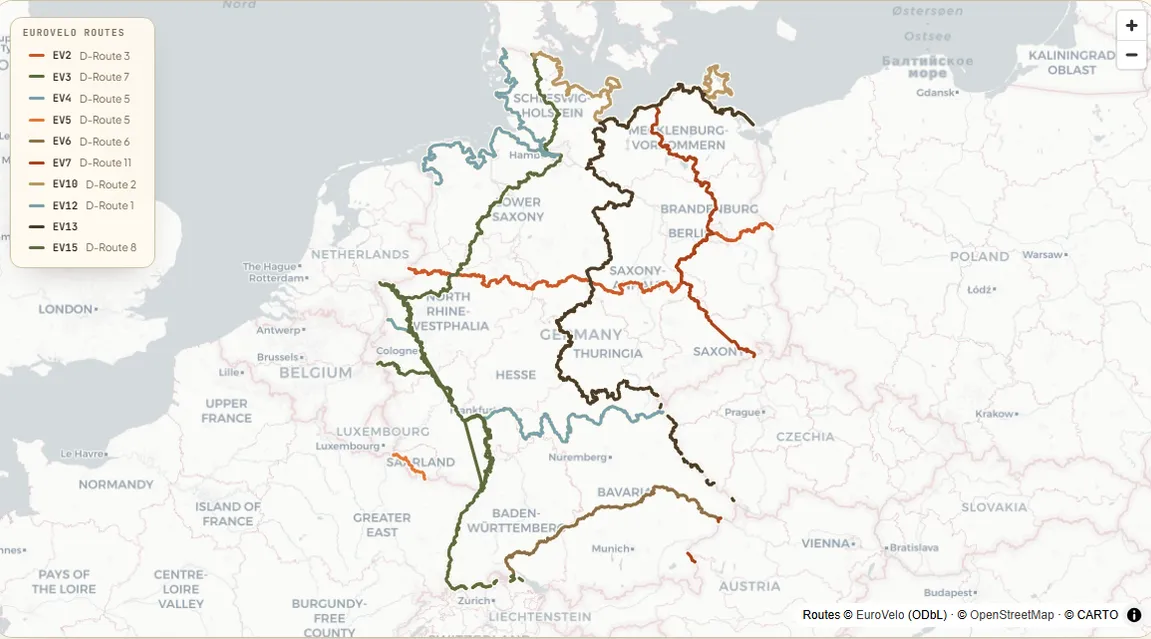
Map of Germany with ten signed EuroVelo routes — the Rhine Cycle Route (EV15) and the Rhine–Main run (EV4) down the west, the Danube (EV6) to Passau in the south-east, the Capitals (EV2) and Pilgrims (EV3) routes across the country, the Baltic (EV10) and North Sea (EV12) coasts along the top, the Sun Route (EV7) through Berlin, and the Iron Curtain Trail (EV13) down the former inner-German border.
10
national routes
~8,000 km
EuroVelo signed
13 D-Routes
national network
Why Germany

Germany packs ten EuroVelo routes into one of Europe’s densest cycling networks.

Their backbone is the Radnetz Deutschland, a system of 13 national D-Routes spanning around 11,700 km and coordinated by BALM. Every German EuroVelo route is co-signed within this network, linking river towpaths, flat valley cycleways and converted railway greenways into a largely traffic-free riding experience.

Cyclists are well catered for, with accommodation displaying the Bett+Bike label offering bike-friendly facilities along the routes. Highlights include the Rhine Cycle Route through the UNESCO-listed Upper Middle Rhine Valley, where the legendary Loreley Rock rises above a landscape of clifftop castles and vineyard-covered slopes.

The variety of scenery is remarkable, stretching from the Wadden Sea and the chalk cliffs of Rügen to the medieval streets of Bamberg, the shores of Lake Constance, and the Danube at Passau.

The mapHover a route to trace it

Ten EuroVelos across Germany.

Germany's ten signed EuroVelos, clipped from the official GPX tracks. Hover a line or its legend entry to trace it — the Rhine, Main and Danube river routes, the Baltic and North Sea coasts, the Sun Route through Berlin and the Iron Curtain Trail — then tap through to the route.

Interactive map loads as you scroll
National & regional infoBackground, not booking

The bodies behind the network.

The national organisations that coordinate, sign and map Germany's cycle routes — here for context and credibility. No need to leave to plan: your route and every place to stay come together in the Bikepackia planner.

The routesTap a card to learn more

Ten ways through Germany.

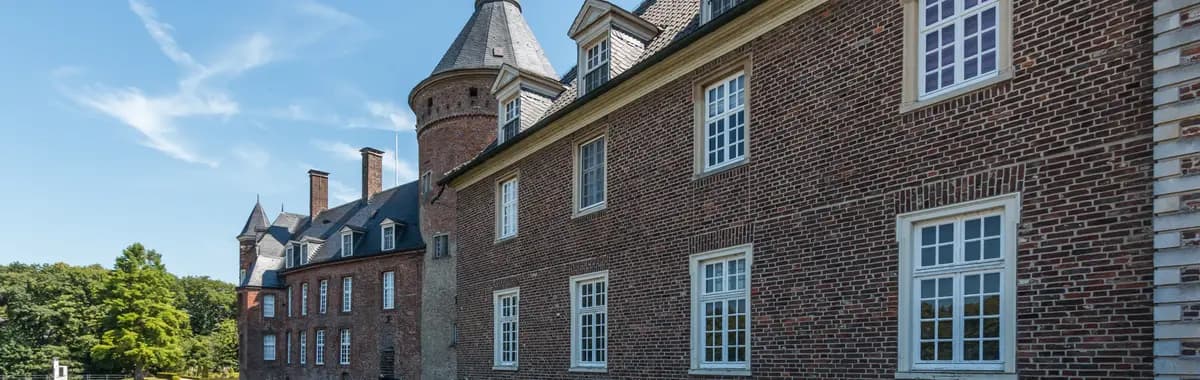
Wasserburg Anholt, Münsterland
Photo: Dietmar Rabich / Wikimedia Commons (CC BY-SA 4.0)

Capitals Route

D-Route 3VREDEN (DUTCH BORDER)KÜSTRIN-KIETZ (PL BORDER)

The full west-to-east traverse — Dutch border to Polish border, signed as D-Route 3. From Vreden it crosses the Münsterland '100 Castles' country, climbs the Teutoburg Forest and the Weser Hills, skirts the Harz, then runs the Fläming and Oderbruch plains to Küstrin-Kietz on the Oder. Mostly flat-to-rolling, but the Teutoburg, Weser and Harz add genuine climbs in the middle third. Wikipedia and Radnetz Deutschland both give the German D3 as 960 km, Vreden→Küstrin-Kietz.

960 km12–16 daysModerate
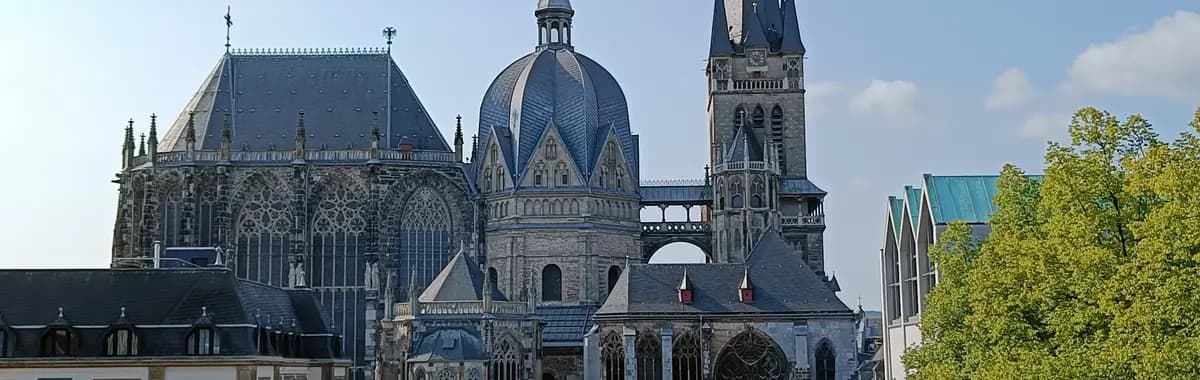
Aachen Cathedral, EV3's western gate
Photo: Karmakolle / Wikimedia Commons (CC BY-SA 4.0)

Pilgrims Route

D-Route 7DANISH BORDER (OCHSENWEG)AACHEN (BE/NL)

The long north-east-to-south-west pilgrim diagonal, signed D-Route 7. From the Danish border on the historic Ochsenweg (Ox Road) it runs through Hamburg and Bremen, the Münsterland castles and the Ruhr's Römer-Lippe-Route, then down the Rhine and the Eifel Water-Castles Route to Charlemagne's Aachen at the Belgian/Dutch corner. Flat-to-gently-rolling in the north, more varied toward the Rhine and the Eifel. EuroVelo grades it Moderate; the section-sum across its nine named German legs is roughly 1,160 km.

1,160 km14–18 daysModerate
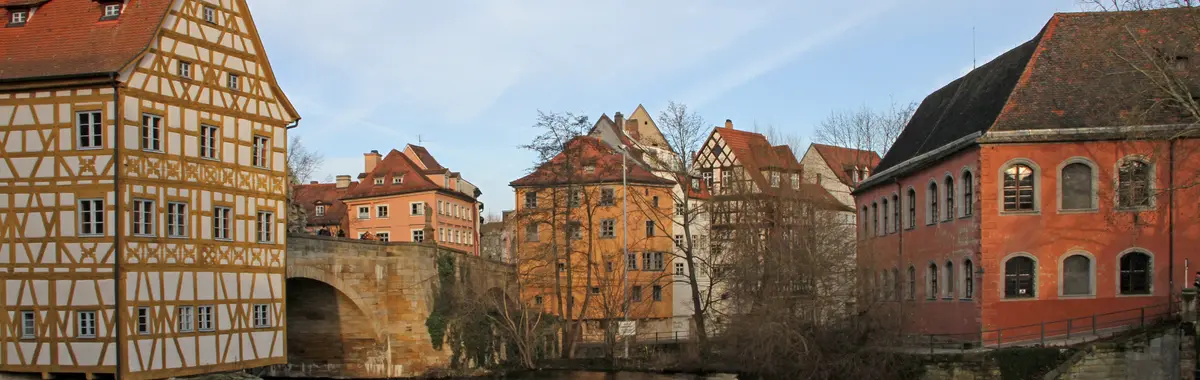
Old Town Hall, Bamberg on the Main route
Photo: Gerd Eichmann / Wikimedia Commons (CC BY-SA 4.0)

Central Europe Route

D-Route 5SIEBENGEBIRGE (BONN)BISCHOFSGRÜN

The Rhine-then-Main river ride, signed D-Route 5. From the Siebengebirge just south of Bonn it follows the Rheinradweg down through Cologne and Düsseldorf to Mainz, then turns east up the flat Mainradweg through Franconian wine country — Würzburg, Bamberg — to Bischofsgrün near the White Main's source in the Fichtelgebirge. Almost entirely flat river-valley cycleway; a gentle rise only at the very end. The ~660 km is a sourced sum of the Rhine (~160 km) and Main (~500 km) legs — EuroVelo publishes no single German figure.

660 km8–11 daysEasy
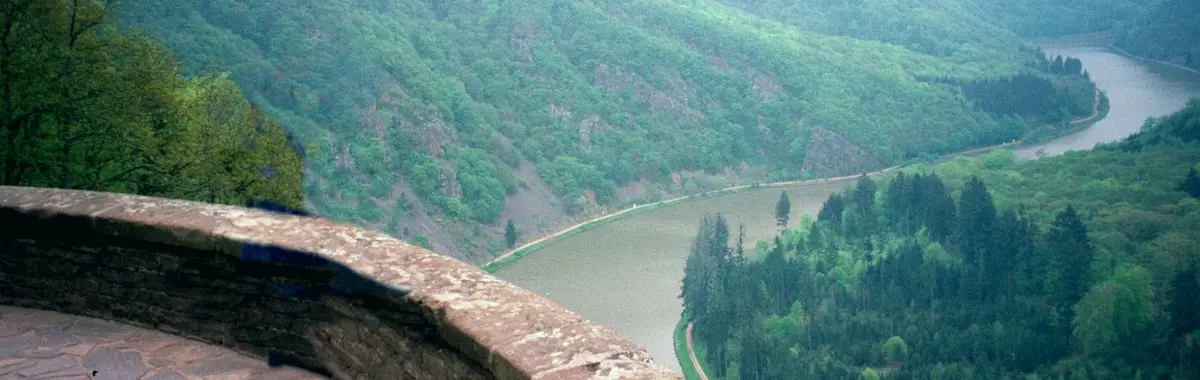
The Saarschleife on the Saar
Photo: Dguendel / Wikimedia Commons (CC BY 3.0)

Via Romea (Francigena)

D-Route 5LUXEMBOURG BORDER (KONZ)SAARBRÜCKEN

The shortest German EuroVelo — a flat Saar-valley hop, signed D-Route 5. From the Luxembourg border near Konz, at the Mosel–Saar confluence, the Saar-Radweg follows the river south through Saarland to Saarbrücken near the French border, past the Saarschleife loop. Family-friendly and completely flat the whole 80 km. (EV4, EV5 and EV6 all carry D-Route 5, but on different ground — this is the Saar length.)

80 km1–2 daysEasy
Passau, where the Danube meets the Inn
Photo: Mattes / Wikimedia Commons (CC BY 2.0 DE)

Atlantic – Black Sea

D-Route 6TUTTLINGEN (UPPER DANUBE)PASSAU (AT BORDER)

Germany's most-ridden river tour — the flat Donauradweg, signed D-Route 6. After a short Rhine and Hohenzollern lead-in from the south-west the route reaches the Danube at Tuttlingen, then runs the river the whole way through Ulm, Ingolstadt, Regensburg and Straubing to Passau, the 'city of three rivers,' at the Austrian border. Generally flat river-valley riding; the lead to the Danube is almost all downhill. About 600 km in Germany, of which the Tuttlingen→Passau Danube run is 565 km.

600 km8–12 daysEasy
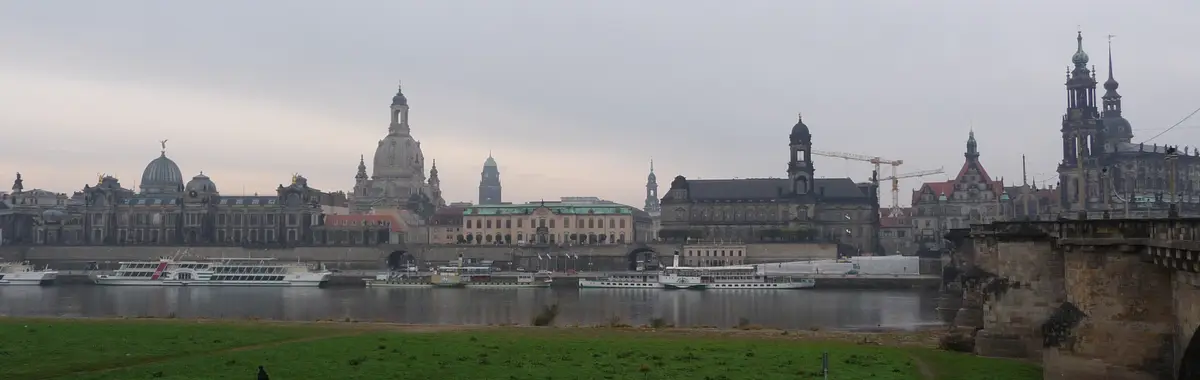
Dresden's Baroque skyline on the Elbe
Photo: JopkeB / Wikimedia Commons (CC BY-SA 4.0)

Sun Route

D-Route 11ROSTOCK (BALTIC)CZECH BORDER

The Baltic-to-Bohemia diagonal, signed D-Route 11 (Berlin–Copenhagen) then the Elbe Cycle Route (D10). From Rostock on the Baltic it threads the Mecklenburg lakes to Berlin, then follows the Elbe past Dresden's Baroque skyline to the Czech border in the Elbe Sandstone uplands. Flat through the lakes and the Havel and Elbe valleys, with gentle hills toward Saxony — EuroVelo grades it easy-to-moderate, Moderate overall for its ~1,040 km length.

1,040 km13–17 daysModerate
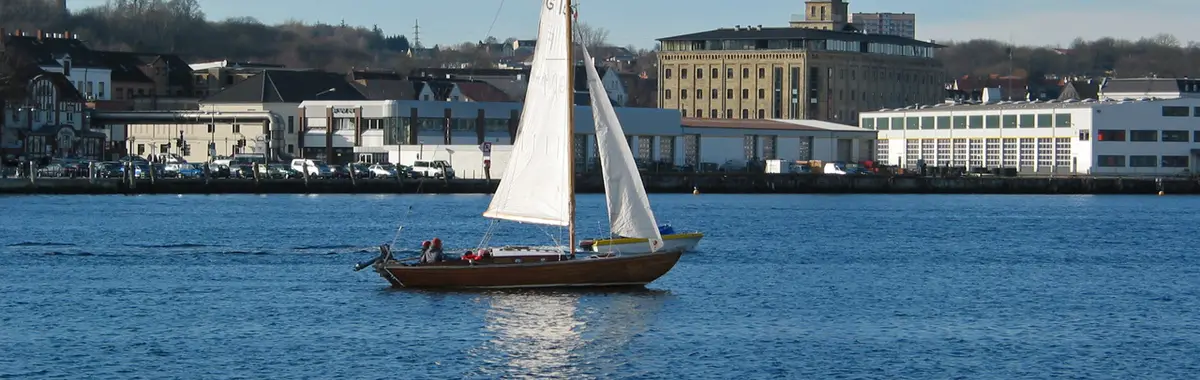
Flensburg Förde, the Baltic gateway
Photo: R. Möhler / Wikimedia Commons (CC BY-SA 3.0)

Baltic Sea Cycle Route

D-Route 2FLENSBURG (DK BORDER)USEDOM (PL BORDER)

The whole German Baltic coast, signed D-Route 2 (Ostseeküsten-Radweg). From Flensburg's fjord at the Danish border it runs the coast east through Kiel and Fehmarn, the Hanseatic cities of Wismar and Stralsund, Rügen's chalk cliffs, to Usedom on the Polish border. Never far from the shore and largely flat, but long, with rolling cliff and bay sections — EuroVelo grades it easy-to-moderate. The German coast totals roughly 1,150 km.

1,150 km15–19 daysModerate
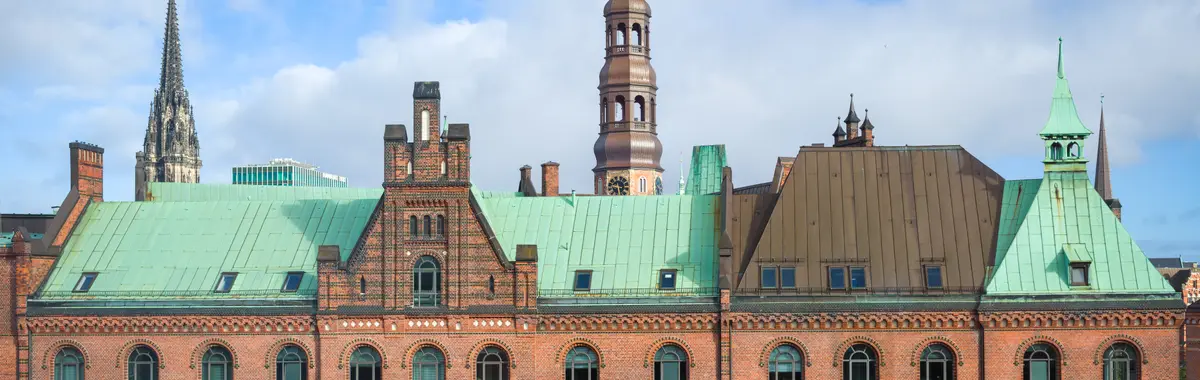
Hamburg's Speicherstadt on the Elbe
Photo: Frank Schulenburg / Wikimedia Commons (CC BY-SA 4.0)

North Sea Cycle Route

D-Route 1KLANXBÜLL (DK BORDER)EMDEN (NL BORDER)

The flat German North-Sea arc, signed D-Route 1 (Nordseeküsten-Radweg). From Klanxbüll at the Danish border it follows the Wadden-Sea coast and the Halligen, turns up the Elbe into Hamburg and its UNESCO Speicherstadt, then runs Cuxhaven, Bremerhaven and Emden to the Dutch border. Flat marsh-and-dike landscape the whole way, always within sight or hearing of the sea — the wind is the only hill. Roughly 930 km over 14 stages.

930 km12–16 daysEasy
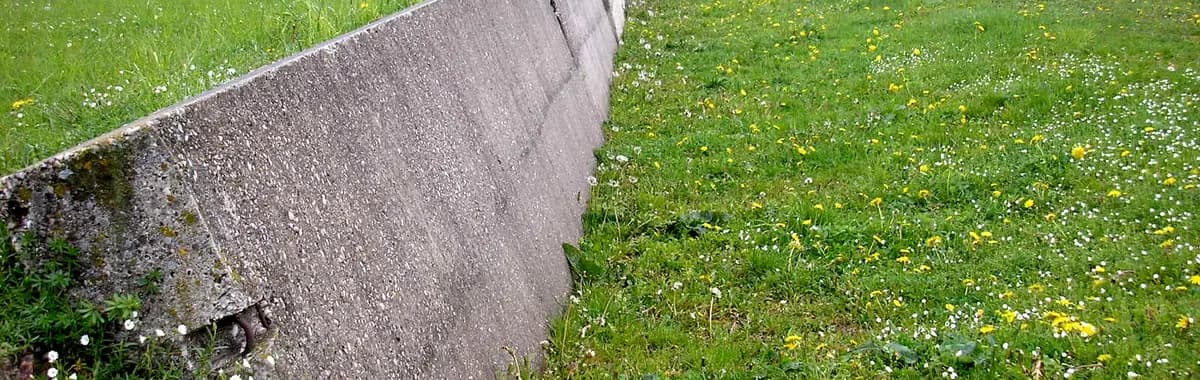
Point Alpha border fortifications on the former inner-German border
Photo: Michael Sander / Wikimedia Commons (CC BY-SA 3.0)

Iron Curtain Trail

BALTIC (NEAR USEDOM)CZECH BORDER (BAVARIA)

The wildest, hilliest German EuroVelo — the former inner-German border, the Grünes Band (Green Belt), with no D-Route number of its own. From the Baltic near Usedom it follows the old border south past the Elbe and the Harz fringe, through the Thuringian uplands and the Bavarian Forest to the Czech border. Rolling-to-hilly throughout and partly gravel, with some still-unsigned sections in Saxony-Anhalt — EuroVelo recommends experienced cyclists. The history is the highlight: Point Alpha, Mödlareuth. About 1,100 km for the German section (the inner-border core runs ~730 km).

1,100 km14–20 daysHard
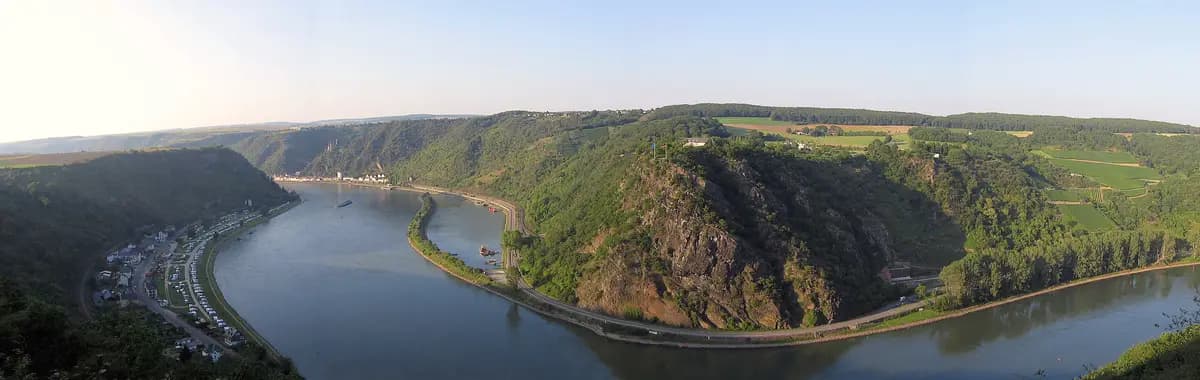
The Loreley and the Rhine gorge
Photo: Felix Koenig / Wikimedia Commons (CC BY-SA 3.0)

Rhine Cycle Route

D-Route 8LAKE CONSTANCE / BASELEMMERICH (NL BORDER)

Germany's headline river ride and most-certified route, signed D-Route 8 (Rheinradweg). From Lake Constance and the Basel/Swiss corner it follows the Rhine north through Karlsruhe and Speyer to Mainz, then the UNESCO Rhine gorge — Bingen, the Loreley, Koblenz — and on through Bonn, Cologne, Düsseldorf and Duisburg to Emmerich at the Dutch border. Largely flat with excellent infrastructure; the gorge adds scenery, not climbs. EuroVelo-Certified on major sections (re-certified Sept 2025) and roughly 865 km of German Rhine.

865 km10–15 daysEasy
Before you rideGermany, the practical bits

What every bikepacker asks about Germany.

Is wild camping allowed in Germany?

Generally no. True wild camping (Wildcampen) is set at the state (Land) level plus federal nature and forest law, and in most states pitching a tent outside a campsite or a designated area is prohibited — fines run roughly €5–€500, far higher inside national parks and nature reserves. National parks, Naturschutzgebiete, biosphere reserves and private land without permission are no-go everywhere. There is no France-style nationwide one-night bivouac right, so assume it's not allowed. The legal way to sleep out is an official Trekkingplatz — booked backcountry tent pitches in forests like the Black Forest, Palatinate and Eifel — or a campsite or Bett+Bike host.

Which season is best for bikepacking Germany?

May to September, with June to August the warm peak. Summer highs sit around 20–25 °C inland, hotter in heatwaves along the Rhine and Danube valleys; spring and early autumn (April–May, September–October) are cooler at about 10–18 °C, quieter and good for the river routes. Avoid November–March — cold, short days and snow in the uplands and Alpine foothills. The flat river routes and the coasts ride well across the whole May–September window; the uplands (Black Forest, Harz, Bavarian Forest, the Iron Curtain Trail's hills) are best June to September. Rain is possible year-round, so pack waterproofs.

Any cycling regulations I should know about?

A few worth knowing. Helmets are not legally mandatory at any age (strongly recommended) and a reflective vest isn't required. Your bike must, by the StVZO, have a white front lamp and reflector, a red rear lamp and reflector, yellow pedal reflectors, wheel reflectors or reflective tyres, two independent brakes and a bell — battery lights are legal, and riding without working lights after dark is finable. Ride on the right and use a cycle path where the blue round sign marks one as compulsory; pavement riding is only for young children. Phone-in-hand while riding runs roughly €55–€100, running a red light about €60–€180, and drink-cycling is an offence at 1.6 ‰ BAC.

What should I expect as a bikepacker in Germany?

Ten signed EuroVelos over a large country, mapped onto the 13 national D-Routes (~11,700 km) coordinated by BALM via Radnetz Deutschland, plus one of Europe's densest Radfernwege networks rated by the ADFC. Terrain ranges from flat coasts and river valleys — the Rhine, Main, Danube and Elbe carry most of the EuroVelo km — to uplands like the Black Forest, Harz and Bavarian Forest and the rolling Iron Curtain Trail. The cyclist-welcome label is Bett+Bike, with thousands of certified beds nationwide. Bikes ride Deutsche Bahn regional trains (RB/RE, S-Bahn) with a bike ticket and usually no reservation; long-distance ICE/IC services need a bike ticket and a compulsory reservation, and many ICE carry no bike spaces at all, so book ahead. Resupply is excellent — bakeries, supermarkets and Gasthöfe are close-spaced on every route.

READY WHEN YOU ARE

Pick the route. We'll plan the rest.

Drop a EuroVelo into the Bikepackia planner and turn the line on the map into rideable days — surface-aware routing, elevation, water, food and a bed every night.