
Bikepackia
EuroVelo · Netherlands

Ride the world's flattest country.

Five signed EuroVelos cross the Netherlands — the whole North Sea coast, the Rhine and Meuse down the great rivers, the Capitals Route to Den Haag and the Schelde-Rhine run through the south. All flat, all on segregated cycle paths. Explore them, then send one straight to the planner.

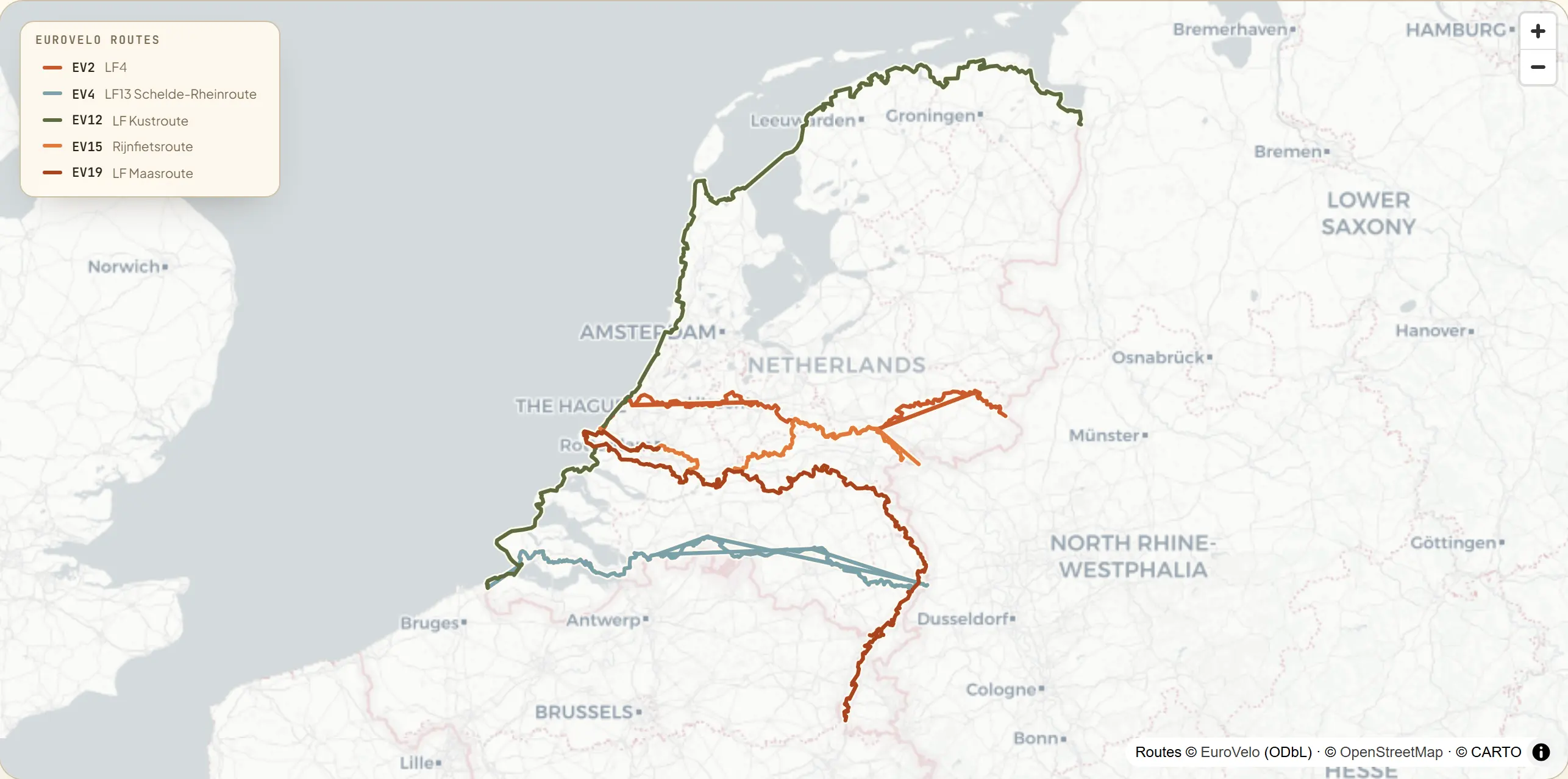
Map of the Netherlands with five signed EuroVelo routes — the North Sea Coastal Route (EV12) hugging the whole western coast, the Rhine Cycle Route (EV15) and the Meuse Cycle Route (EV19) converging on the Rotterdam delta, the Capitals Route (EV2) running east to Den Haag, and the Central Europe Route (EV4) across the southern provinces to Vlissingen.
5
national routes
~1,950 km
EuroVelo signed
~3,750 km
LF network
Why Netherlands

Five EuroVelos on the world's best cycle grid.

The Netherlands’ EuroVelo routes are woven into the LF network, a system of around 3,750 km of Langeafstand Fietsroutes managed by Fietsplatform and signposted in both directions. Every Dutch EuroVelo route follows part of this network, which sits atop one of the world’s most extensive cycling infrastructures.

Riders enjoy an almost uninterrupted network of segregated cycle paths, dike-top routes, dune trails and canal towpaths. The terrain is famously flat throughout — with the wind often providing the greatest challenge. Accommodation displaying the Fietsers Welkom! label offers facilities tailored to cycle tourists.

The landscapes are as varied as they are accessible, ranging from the North Sea dunes and the engineering marvels of the Zeeland Delta Works to the river plains of the Waal at Nijmegen, the UNESCO-listed windmills of Kinderdijk and the modern skyline of Rotterdam.

The mapHover a route to trace it

Five EuroVelos across the Netherlands.

The Netherlands' five signed EuroVelos, clipped from the official GPX tracks. Hover a line or its legend entry to trace it — the North Sea coast, the Rhine and Meuse river routes, the Capitals Route to Den Haag and the Schelde-Rhine run — then tap through to the route.

Interactive map loads as you scroll
National & regional infoBackground, not booking

The body behind the network.

The Netherlands has one national cycling body — Fietsplatform — running the LF network behind every EuroVelo here, surfaced through its two public portals. It's here for context and credibility. No need to leave to plan: your route and every place to stay come together in the Bikepackia planner.

The routesTap a card to learn more

Five ways through the Netherlands.

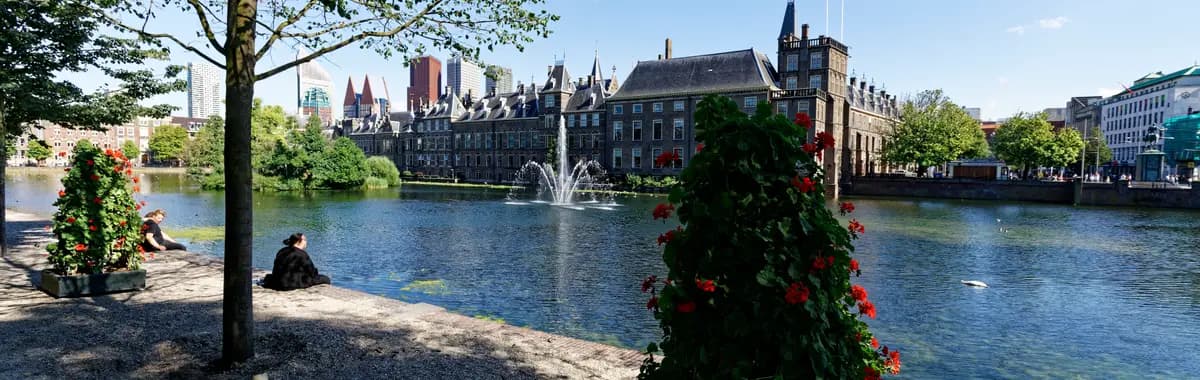
The Binnenhof and Hofvijver, Den Haag
Photo: Txllxt TxllxT / Wikimedia Commons (CC BY-SA 4.0)

Capitals Route

LF4GERMAN BORDER (ZWILLBROCK)DEN HAAG

The flat east-to-west traverse to the seat of Dutch government — signed LF4 on its main leg. From the German border at Zwillbrock it crosses to Borculo and the Achterhoek, skirts the Veluwe fringe, then runs through Utrecht and the polders to Den Haag (The Hague) — not Amsterdam, which sits off this route. Fully flat the whole way, on cycle paths and the signed LF4 Midden-Nederlandroute. The eastern Zwillbrock→Borculo connector to German R1 is not signed as a long-distance route. The ~320 km is a sourced sum (LF4 ~300 km plus the short eastern leg) — EuroVelo publishes no single Dutch figure.

320 km4–6 daysEasy
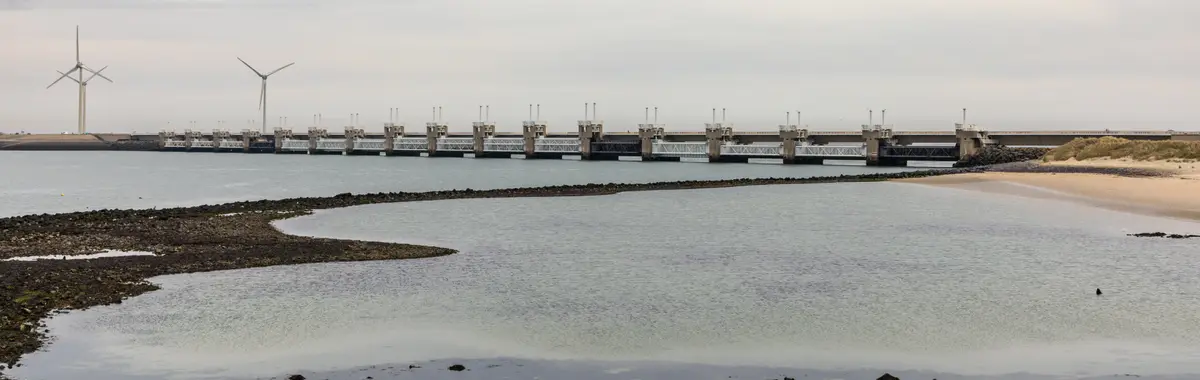
The Oosterscheldekering, Zeeland
Photo: Dietmar Rabich / Wikimedia Commons (CC BY-SA 4.0)

Central Europe Route

LF13 Schelde-RheinrouteVENLO (GERMAN BORDER)VLISSINGEN

The southern-provinces diagonal — signed LF13 Schelde-Rheinroute. From Venlo on the German border it runs south-west through Eindhoven and Breda, across the Brabant countryside into Zeeland, past the Delta Works storm barriers to Vlissingen on the North Sea. Flat the whole 285 km on cycle paths and the signed LF13, through Limburg, Brabant and the dam-linked Zeeland islands. The Oosterscheldekering — the Eastern Scheldt storm-surge barrier — is the landmark on the approach to the coast.

285 km4–5 daysEasy
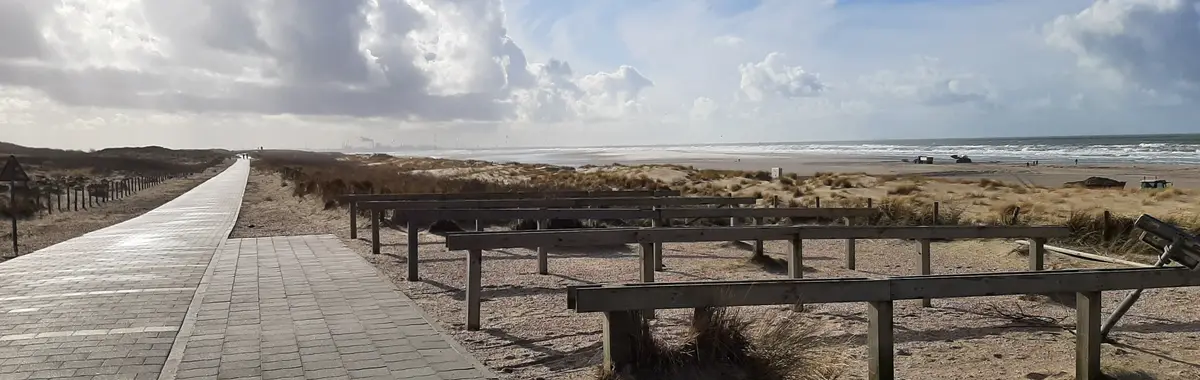
The dune cycleway at Kijkduin
Photo: Smiley.toerist / Wikimedia Commons (CC BY-SA 4.0)

North Sea Cycle Route

LF KustrouteCADZAND-BAD (BE BORDER)BAD NIEUWESCHANS (DE BORDER)

The longest Dutch line and the headline ride — the whole 610 km coast, signed the LF Kustroute. From Cadzand-Bad at the Belgian border it crosses the dam-linked Zeeland islands, runs the South-Holland dunes past Scheveningen and the Wadden Sea coast with its terp villages, to Bad Nieuweschans at the German border in the far north-east. Flat dune, dike and polder riding with a large car-free share through the dune reserves — EuroVelo grades it Medium because it is long and wind-exposed on the open North Sea. The wind is the only hill.

610 km8–11 daysModerate
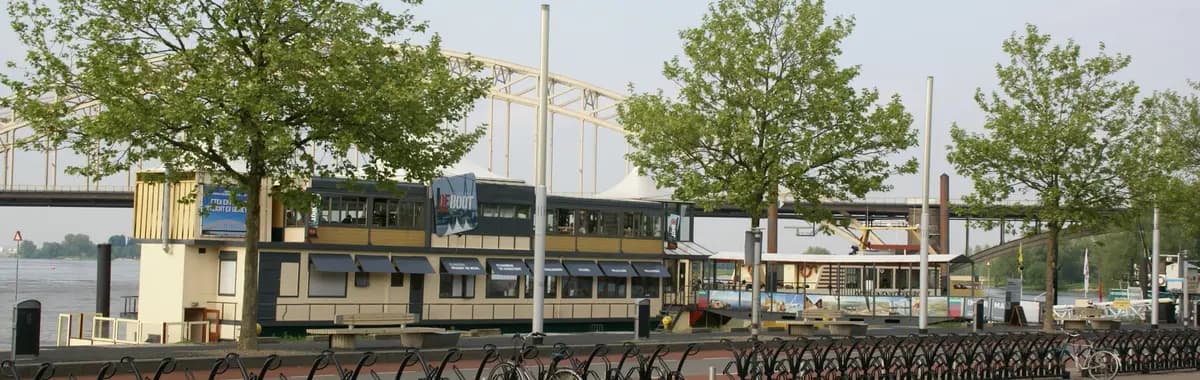
The Waal at Nijmegen
Photo: Hermann Luyken / Wikimedia Commons (CC0)

Rhine Cycle Route

RijnfietsrouteMILLINGEN AAN DE RIJN (DE BORDER)HOEK VAN HOLLAND

The great-rivers ride from the German border — signed the Rijnfietsroute. From Millingen aan de Rijn it follows the Waal past Nijmegen, runs the Rhine through the Betuwe orchards and the Kromme Rijn at Utrecht, then crosses the Biesbosch and passes UNESCO Kinderdijk before reaching the North Sea delta at Hoek van Holland via Rotterdam. Flat river-plain riding the whole 270 km on cycle paths and the signed LF; a 100 km River Waal variant branches at Millingen toward Vuren. EuroVelo rates the Dutch sections from Certified to Partially Developed.

270 km4–5 daysEasy
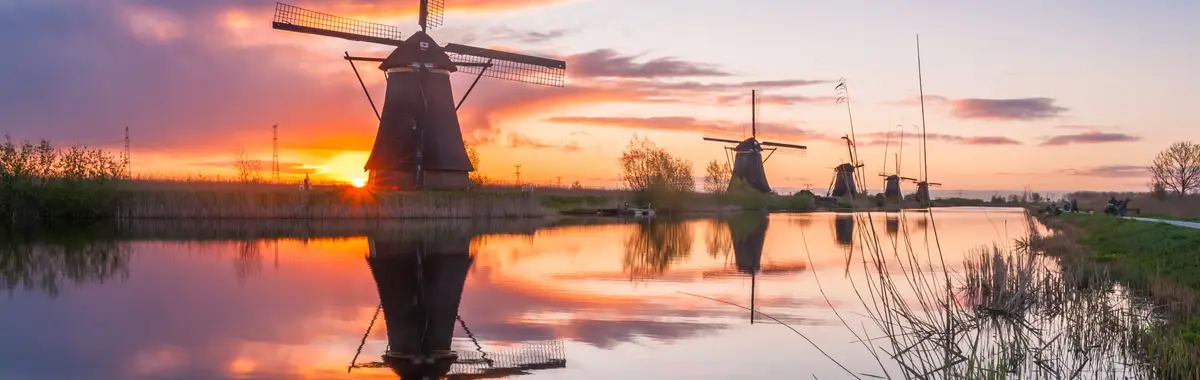
The Kinderdijk windmills
Photo: Dmytro Balkhovitin / Wikimedia Commons (CC BY-SA 4.0)

Meuse Cycle Route

LF MaasrouteMAASTRICHT (BE BORDER)ROTTERDAM

The Meuse from Maastricht to the sea — signed the LF Maasroute, the country's iconic-windmill ride. From Maastricht at the Belgian border it runs the river north through Roermond, Venlo and 's-Hertogenbosch, crosses the great-rivers delta past UNESCO Kinderdijk and Dordrecht, then reaches the port of Rotterdam via Hoek van Holland. Flat Meuse-valley riding the whole way — EuroVelo grades it easy-to-moderate, with limited motorised traffic. The 480 km is the signed LF Maasroute length; the EuroVelo English page's loose ~300–350 km estimate covers a shorter section.

480 km6–8 daysEasy
Before you rideThe Netherlands, the practical bits

What every bikepacker asks about the Netherlands.

Is wild camping allowed in the Netherlands?

No. True wild camping (wildkamperen) is prohibited — pitching outside a designated site in the dunes, forest, on a beach or along a dike carries fines up to roughly €500 per person, to protect the country's scarce nature. Dunes, beaches, nature reserves, national parks and private land are all no-go. There is no France-style general one-night bivouac right; a single-night, no-tent bivouac is generally tolerated only where not specifically banned. The legal ways to sleep out are official paalkamperen pole-camping spots (many closed after 2020, so check current listings), Welcome To My Garden hosts, campsites and 'Fietsers Welkom!' beds.

Which season is best for bikepacking the Netherlands?

April to September, with May to September the sweet spot and June and September the standouts — good weather, fewer crowds than peak summer. Summer highs sit around 18–22 °C, occasionally hotter in heatwaves; spring and early autumn are cooler at about 9–18 °C, and rain is possible year-round, so pack waterproofs in any season. Avoid November–March — cold, short days and frequent wind. Wind is the defining variable: it blows hardest January–March and least May–September, so the warm months also give the easiest riding on the exposed North Sea coast (EV12) and the open polders.

Any cycling regulations I should know about?

A few worth knowing. Helmets are not legally required on a normal bike or standard e-bike (recommended), but are compulsory on a speed-pedelec, and a reflective vest isn't mandatory. After dark or in poor visibility your bike needs a steady (non-flashing) white or yellow front light and a red rear light, plus pedal and wheel reflectors, working brakes and a bell — riding without working lights runs roughly €75. Ride on the right and use the cycle path (fietspad) where one is marked, or risk about €120. Phone-in-hand while riding is banned at roughly €170, one of the steepest fines; a missing bell is about €45. These figures are revised periodically, so treat them as a guide.

What should I expect as a bikepacker in the Netherlands?

Five signed EuroVelos over the world's most cycle-friendly country, all mapped onto the national LF network (~3,750 km of Langeafstand Fietsroutes) coordinated by Fietsplatform, on top of the dense knooppunten numbered-junction system. Terrain is flat end-to-end — segregated cycle paths, dike tops, dune and canal/river paths — and the only real effort is wind, worst on the open coast. The cyclist-welcome label is 'Fietsers Welkom!', with 1,000+ certified beds, cafés and campsites on-route. You can take a full-size bike on most NS (Dutch Railways) trains outside weekday rush hours with a day Bike Ticket (Dagkaart Fiets), space-available in the bike carriages and barred at peak; folding bikes ride free, and OV-fiets station rentals cover the last mile. Resupply is excellent — supermarkets, bakeries and cafés are close-spaced on every route.

READY WHEN YOU ARE

Pick the route. We'll plan the rest.

Drop a EuroVelo into the Bikepackia planner and turn the line on the map into rideable days — surface-aware routing, elevation, water, food and a bed every night.