


Bikepackia
EuroVelo · Spain

Cycle Spain, Atlantic to Med.

Three signed EuroVelo routes cross Spain — the wild Atlantic spine, the Camino de Santiago and the long Mediterranean coast. Explore each one, then send it straight to the planner.

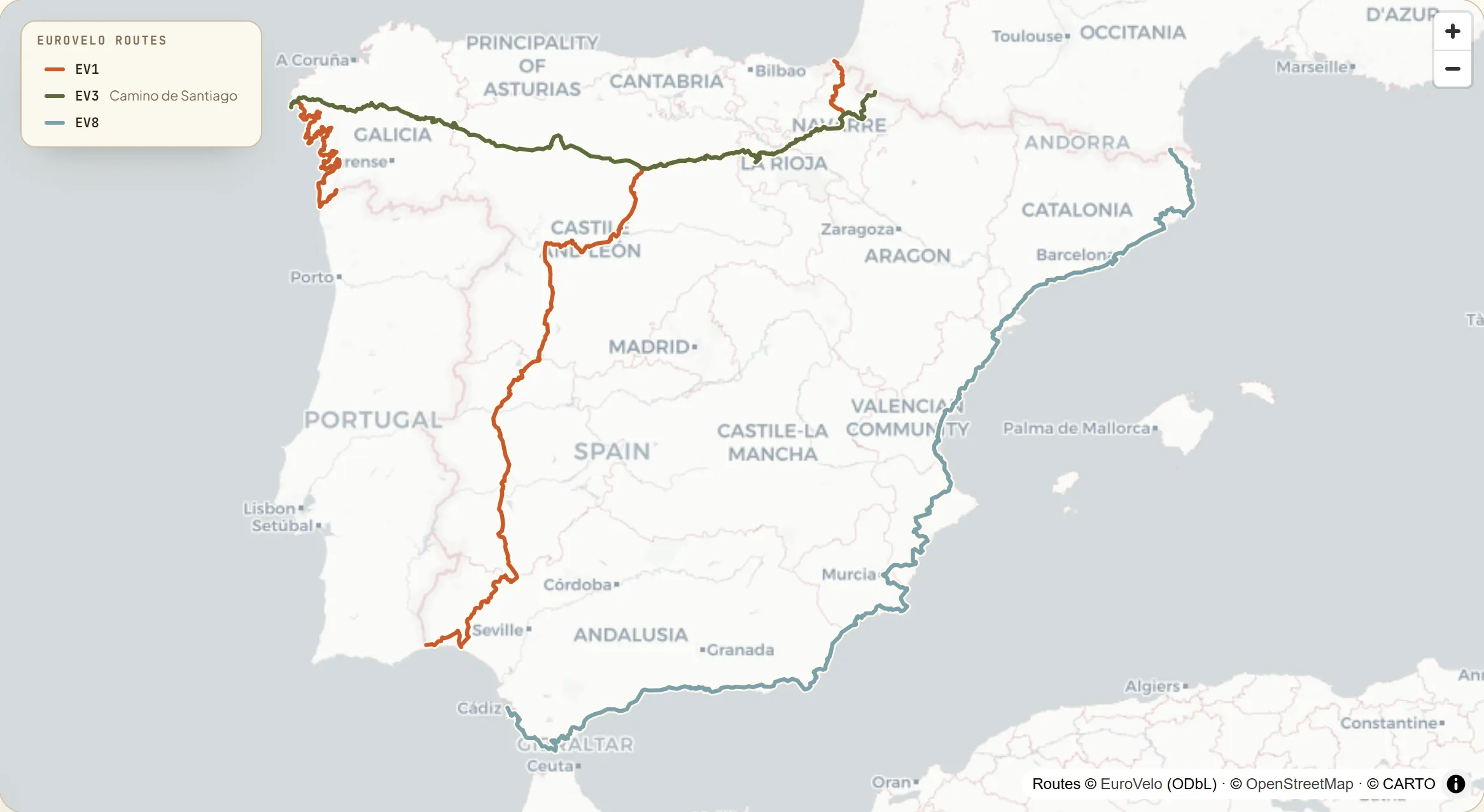
Map of mainland Spain with the three signed EuroVelo routes each drawn in its own colour — the Atlantic Coast down the west, the Camino de Santiago across the north, and the Mediterranean coast down the east.
3
national routes
4,295 km
EuroVelo signed
3,300+ km
car-free greenways
Why Spain

A federated network, a greenway backbone.

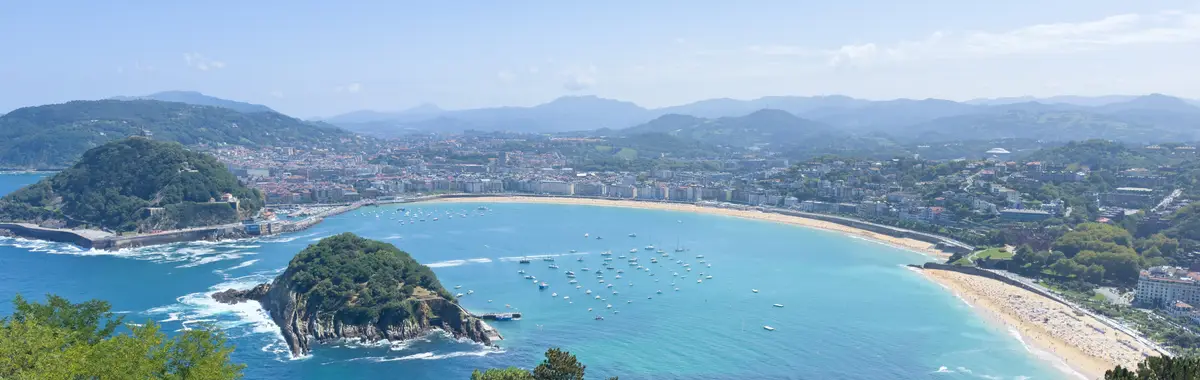
Spain has no single national véloroute scheme — its network is a federation surfaced through the new spainbybike.es portal, over 11,500 km of routes pooled from many programmes. The traffic-free backbone is the Vías Verdes: roughly 135 greenways, 3,300+ km of disused railway turned car-free trail. Ride the signature corridor, the Camino de Santiago — 20,776 cyclists in 2024 — from the Basque coast and La Concha bay through the Castilian meseta to Mediterranean Valencia and the Costa Brava.

The mapHover a route to trace it

All three routes, one map.

Every signed EuroVelo in Spain, clipped from the official GPX tracks to the mainland. Hover a line or a legend entry to trace it end to end, then tap through to the route.

Interactive map loads as you scroll
National & regional infoBackground, not booking

The bodies behind the network.

The national organisations that coordinate, build and map Spain's cycle routes — here for context and credibility. No need to leave to plan: your route and every place to stay come together in the Bikepackia planner.

The routesTap a card to learn more

Three ways across Spain.

La Concha bay, San Sebastián
Photo: Kent Wang / Wikimedia Commons (CC BY-SA 4.0)

Atlantic Coast Route

IRÚNAYAMONTE

Spain's long Atlantic spine. From the Basque border at Irún along the Cantabrian and Galician coast, then south to the Portuguese border at Ayamonte — shadowing the Camino del Norte, with a Galicia branch out to Cape Fisterra. Coast and hills, rarely flat. Heads up: the Montoya tunnel between Endarlatsa and Zalain Zoko is closed, with a temporary diversion on the N-121A road.

1,685 km18–26 daysModerate–Hard
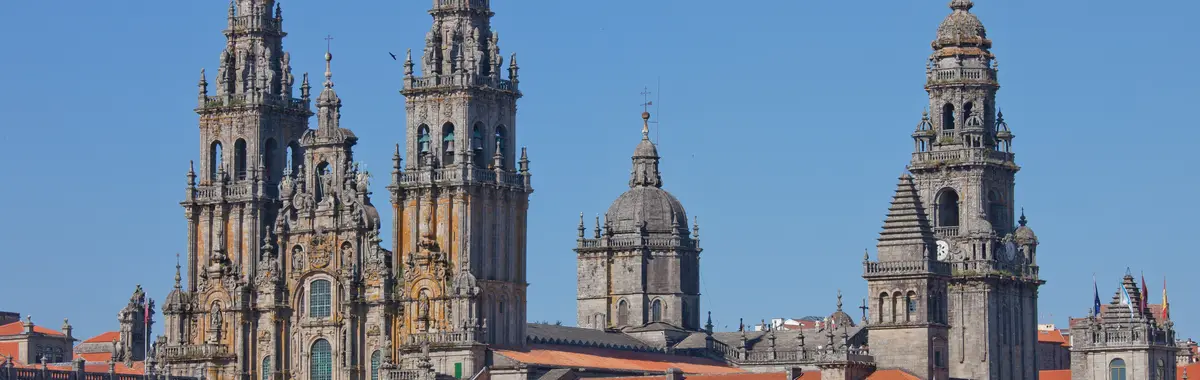
Catedral de Santiago de Compostela
Photo: Luis Miguel Bugallo Sánchez / Wikimedia Commons (CC BY-SA 3.0)

Pilgrims Route

Camino de SantiagoRONCESVALLESSANTIAGO DE COMPOSTELA

The headline ride — the Camino Francés. From the Navarrese Pyrenees at Roncesvalles across the flat, fast Castilian meseta to Santiago de Compostela, with the extension on to Cape Fisterra. Spain's most-walked and most-ridden corridor: nearly 21,000 pilgrims cycled it in 2024, and it's the best waymarked of the three.

910 km10–14 daysModerate
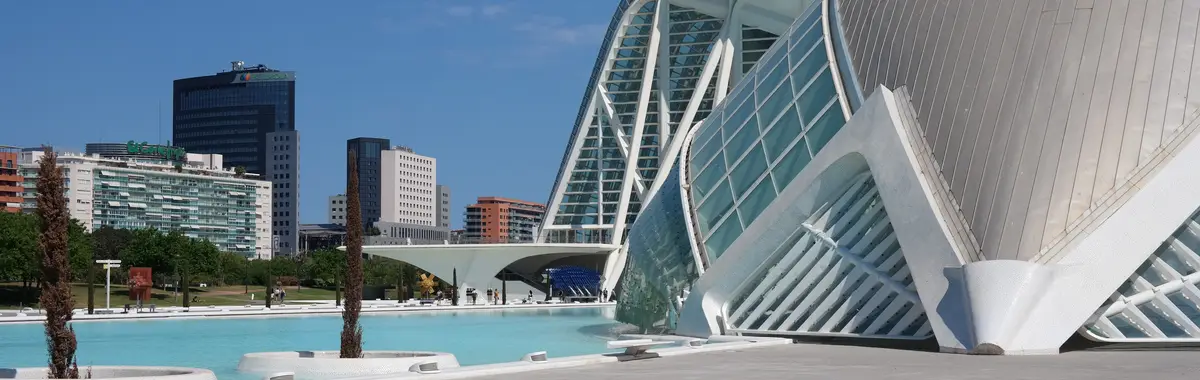
City of Arts and Sciences, Valencia
Photo: Choinowski / Wikimedia Commons (CC BY-SA 4.0)

Mediterranean Route

LA JONQUERACÁDIZ

The long Mediterranean coast run — Costa Brava to the Strait of Gibraltar, past Barcelona, Valencia and Murcia. The most scenic of the three but the least finished: only partially signed, with large on-road stretches, so plan for navigation. Note: the October 2024 floods damaged sections south of Valencia around Alfafar and Sueca, which may not be rideable.

~1,700 km18–24 daysModerate
Before you rideSpain, the practical bits

What every bikepacker asks about Spain.

Is wild camping allowed in Spain?

Generally no. There's no single national law — each of the 17 autonomous communities sets its own rules, and free camping (acampada libre) is prohibited by default unless specifically permitted. It's strictly banned in national and natural parks, on beaches and along the coast, where Coastal Law fines start around €40 per square metre occupied; general illegal-camping fines run from roughly €30 to €3,000 depending on the location and protection level. A discreet one-night bivouac in unprotected areas is widely tolerated in practice, but never guaranteed legal — check the regional rule before you pitch.

Which season is best for bikepacking Spain?

Spring (March–May) and autumn (September–November) are best overall. Avoid July and August, especially in the south and across the central meseta plateau, where inland heat is extreme. The regions split: northern Spain — Galicia and the Basque Country — is cooler and wetter, best in May–June and September and the only comfortable summer option, while the southern and coastal routes ride well from October to April.

Any cycling regulations I should know about?

A few that catch tourers out. A helmet is mandatory on interurban (out-of-town) roads for all cyclists; in towns it's required only for under-16s, though some municipalities such as Zaragoza and A Coruña mandate it for everyone. You need an approved white front light or reflector and a non-triangular red rear reflector, plus reflective clothing at night or in poor visibility on interurban roads. Ride on the right, and headphones are banned while riding. Fines for these run up to about €200.

What should I expect as a bikepacker in Spain?

A federated network rather than one national scheme — over 11,500 km surfaced through the spainbybike.es portal. The traffic-free backbone is the roughly 135 Vías Verdes greenways (3,300+ km on old railways) plus the Caminos Naturales; the EuroVelo routes themselves are partly on-road, EV8 especially. Bikes ride on Renfe trains, but the rules vary: on AVE and Larga Distancia the bike must be folded or bagged (free, booking required), Media Distancia needs the free Tren+Bici add-on, and Cercanías commuter trains take bikes with no reservation. Resupply is dense on the coastal corridors and sparser across the hot meseta interior — carry water on inland stretches.

READY WHEN YOU ARE

Pick the route. We'll plan the rest.

Drop a EuroVelo into the Bikepackia planner and turn the line on the map into rideable days — surface-aware routing, elevation, water, food and a bed every night.