

Bikepackia
EuroVelo · Sweden

Lapland fells, Baltic coast, four routes.

Four signed EuroVelos cross Sweden — the Baltic Sea Cycle Route up the full east coast from Ystad past Stockholm to the Finnish border, the Sun Route the length of the country to the Helsingør ferry, the North Sea Cycle Route on flagship Kattegattleden, and the Pilgrims Route down the Bohuslän coast. Wild camping is legal under Allemansrätten, Sweden's right of public access. Explore them, then send one straight to the planner.

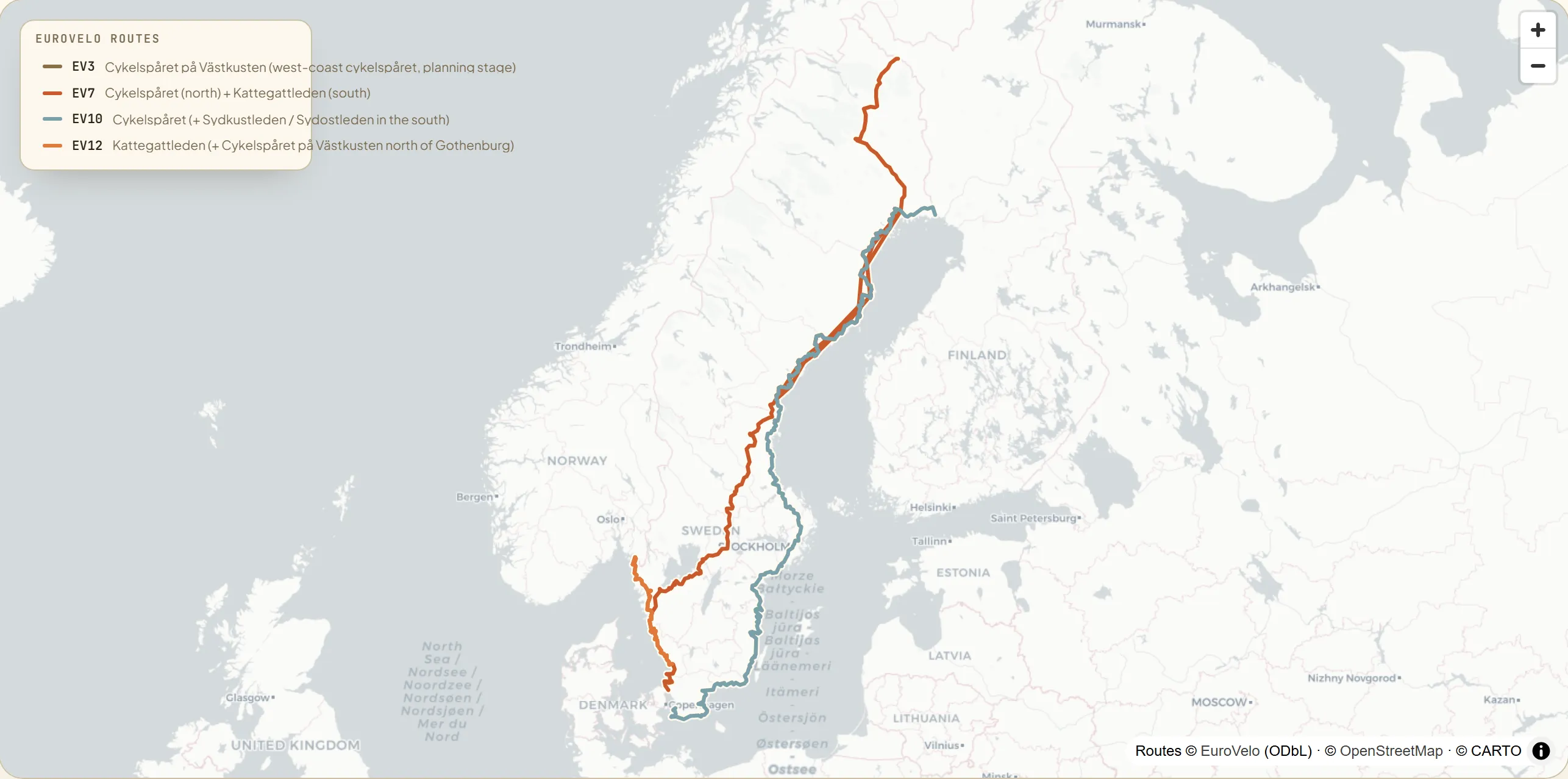
Map of Sweden with four signed EuroVelo routes — EV3 the Pilgrims Route (Cykelspåret på Västkusten) from Strömstad at the Norwegian border down the Bohuslän coast to Gothenburg, EV7 the Sun Route from Haparanda on the Finnish border the full length of the country to Helsingborg, EV10 the Baltic Sea Cycle Route from Ystad up the east coast past Stockholm to Haparanda, and EV12 the North Sea Cycle Route on Kattegattleden from Helsingborg to Gothenburg.
4
national routes
over 5,000 km
EuroVelo signed
~900 km
South Sweden Trails
Why Sweden

Four EuroVelos the length of a long, coastal country.

Four EuroVelo routes cross Sweden, covering over 5,000 km from the fells of Lapland to Skåne's sandy beaches. The signed network is anchored in the south by the South Sweden Trails — three flagship national cycle routes (nationella cykelleder) totalling roughly 900 km — and the long Cykelspåret, a coastal route the EuroVelos follow up both flanks of the country.

Expect a mix of dedicated car-separated cycle paths and quiet minor roads rather than a dense greenway grid: Kattegattleden, Sweden's first national cycle route, runs about 56% on path fully separated from traffic. Bike-friendly stops are flagged by Cykelvänligt boende — the "Cyclist welcome!" scheme run by Sweden by Bike, which certifies accommodation and cafés offering secure storage, a pump and basic tools.

The headline ride is Kattegattleden — 390 km of Kattegatt coast from Helsingborg to Gothenburg through Halland, split into eight train-linked stages and co-signed by EV7 and EV12.

The mapHover a route to trace it

Four EuroVelos across Sweden.

Sweden's four signed EuroVelos, clipped from the official GPX tracks. Hover a line or its legend entry to trace it — EV10 up the full Baltic coast from Ystad past Stockholm to Haparanda, EV7 the entire length of the country from the Finnish border to Helsingborg, EV12 along the Kattegatt coast on Kattegattleden, and EV3's short Bohuslän leg down to Gothenburg — then tap through to the route.

Interactive map loads as you scroll
National & regional infoBackground, not booking

The bodies behind the network.

Sweden's cycle network is coordinated by Cykelfrämjandet (the national cycling-advocacy organisation and prospective EuroVelo coordination centre), with Sweden by Bike running the Cyclist Welcome! accommodation scheme and EuroVelo Sweden hosting the route GPX. It's here for context and credibility. No need to leave to plan: your route and every place to stay come together in the Bikepackia planner.

The routesTap a card to learn more

Four ways across Sweden.

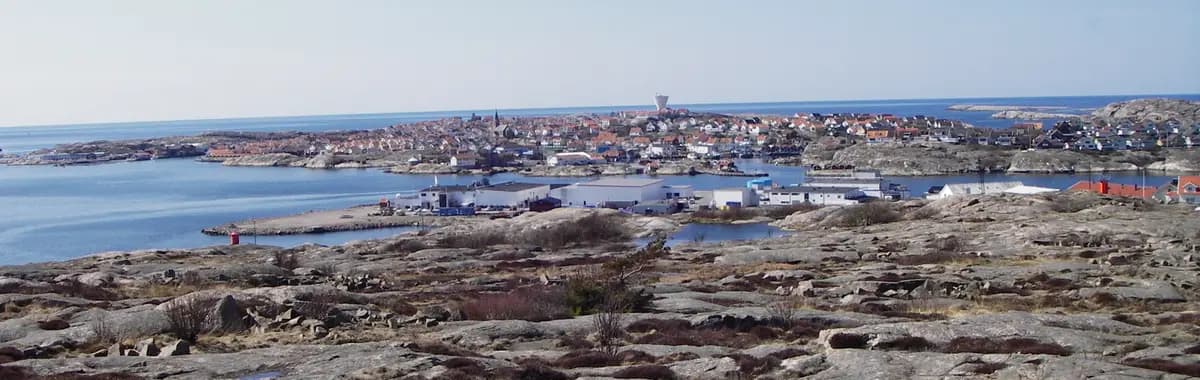
Smögen fishing village on the Bohuslän coast, near the start of EV3
Photo: Marcusroos / Wikimedia Commons (CC BY-SA 3.0)

Pilgrims Route

Cykelspåret på Västkusten (west-coast cykelspåret, planning stage)STRÖMSTADGOTHENBURG

Sweden's shortest EuroVelo leg — about 290 km down the granite skerries and red fishing huts of the Bohuslän archipelago coast from Strömstad, the Bohuslän town just inside the Norwegian border, through Lysekil and Stenungsund to Gothenburg. It co-signs Cykelspåret på Västkusten (the west-coast cykelspåret), which EV12 also follows north of Gothenburg, but this stretch is "at planning stage" with limited dedicated infrastructure — a quiet-roads adventure rather than a finished greenway. Moderate: short, but occasionally hilly with steep coastal pitches, and navigation and road-sharing add to the effort.

~290 km3–5 daysModerate
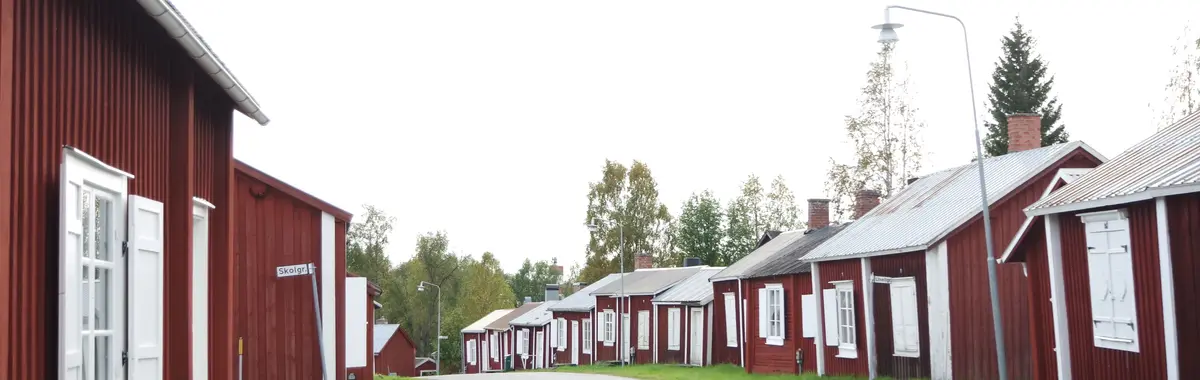
Gammelstad Church Town near Luleå (UNESCO World Heritage Site), on the Gulf of Bothnia
Photo: Kola Adebayo / Wikimedia Commons (CC BY-SA 4.0)

Sun Route

Cykelspåret (north) + Kattegattleden (south)HAPARANDAHELSINGBORG

The full length of Sweden on one route — roughly 2,000 km from Haparanda, the Torne-valley town on the Finnish border, descending the Gulf of Bothnia past the UNESCO red-cottage church town of Gammelstad near Luleå, then through Sundsvall and Örebro to Gothenburg, where it picks up the flagship Kattegattleden coast to Helsingborg and the ferry to Helsingør in Denmark. The northern half follows Cykelspåret; the southern 390 km is Kattegattleden, shared with EV12. The total is approximate — only the Kattegattleden sub-section has a firm figure. Moderate: predominantly flat-to-rolling coastal riding, so the challenge is total distance, northern remoteness and resupply, not climbing.

~2,000 km22–30 daysModerate
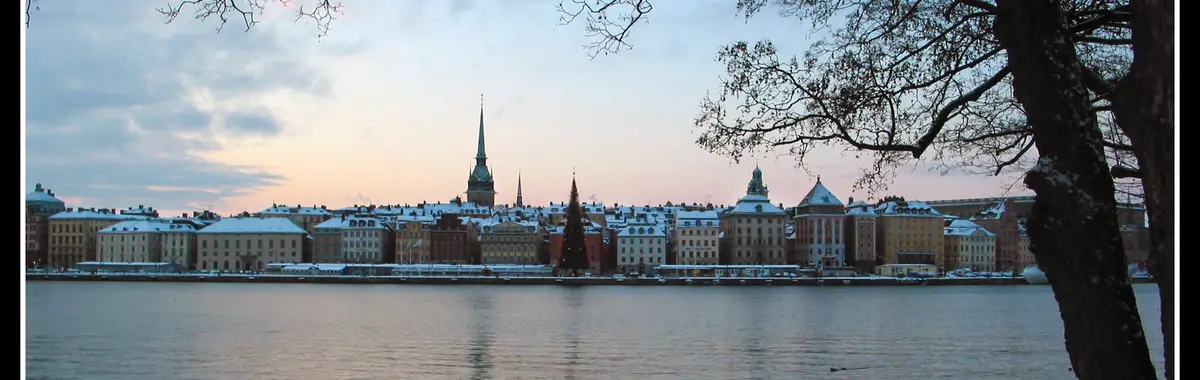
Gamla Stan, Stockholm's old-town waterfront, on the Baltic coast
Photo: R. Möhler / Wikimedia Commons (CC BY-SA 3.0)

Baltic Sea Cycle Route

Cykelspåret (+ Sydkustleden / Sydostleden in the south)YSTADHAPARANDA

The big one — Sweden's full Baltic flank, about 2,555 km from medieval Ystad on the Skåne south coast, past the Stockholm archipelago and Gamla Stan (Stockholm's old town), up the Gulf of Bothnia to the Finnish border at Haparanda. It coincides with Cykelspåret, the national Ystad → Haparanda coastal route, and in the south overlaps two of the South Sweden Trails — Sydkustleden (the South Coast Trail, 260 km) and Sydostleden (the Southeast Trail, 270 km). The longest EuroVelo leg in Sweden. Moderate: predominantly flat coastal cycling, so the difficulty is distance and northern remoteness rather than terrain; the signed Skåne sub-sections are easy and well-marked.

~2,555 km28–36 daysModerate
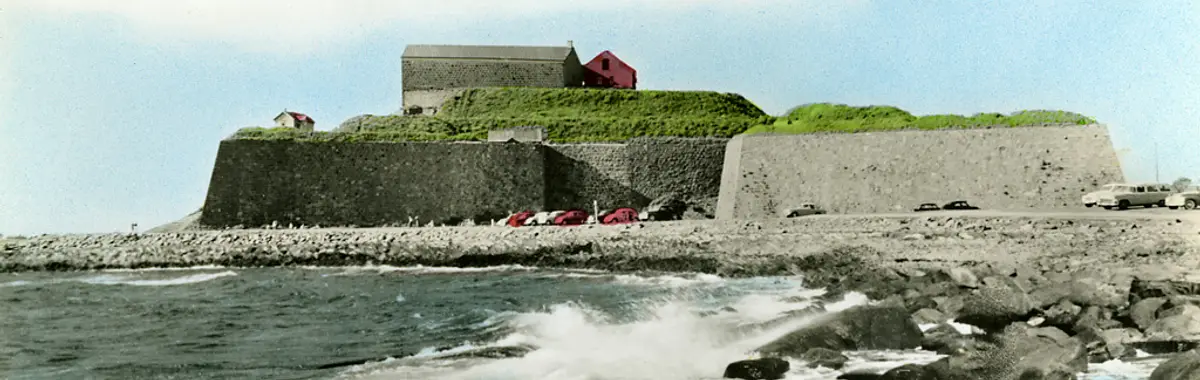
Varberg Fortress on the Halland coast, on Kattegattleden
Photo: Riksantikvarieämbetet (Swedish National Heritage Board) / Wikimedia Commons (public domain)

North Sea Cycle Route

Kattegattleden (+ Cykelspåret på Västkusten north of Gothenburg)HELSINGBORGGOTHENBURG

Sweden's flagship and easiest EuroVelo leg — about 390 km of Kattegatt coast through Halland on Kattegattleden, the country's first national cycle route, opened in 2015 and running from Helsingborg to Gothenburg. Around 56% is on path fully separated from traffic, and it is split into eight gentle, train-linked day stages, passing Varberg Fortress on the Halland coast. North of Gothenburg the corridor continues on Cykelspåret på Västkusten toward the Norwegian border at Strömstad, but that stretch is still "at planning stage." Kattegattleden is shared with EV7. Easy: flat coastal cycling and Sweden's most beginner-friendly EuroVelo.

~390 km5–7 days56%car-freeEasy
Before you rideSweden, the practical bits

What every bikepacker asks about Sweden.

Is wild camping allowed in Sweden?

Yes — Sweden has Allemansrätten, the Right of Public Access, constitutionally protected since 1994. Anyone may walk, cycle and pitch a tent for one to two nights on uncultivated land without the landowner's permission, as long as you keep away from dwellings, cultivated fields and grazing land. The general rule is no more than two nights in the same spot; for longer, ask the landowner. Tents are generally not allowed in national parks and many nature reserves — each protected area sets its own rules, so check before you pitch. Campfires are permitted only where conditions are safe and may be banned outright in parks or during fire-risk periods.

Which season is best for bikepacking Sweden?

May to September, with June to August the peak. Southern and central Sweden run about 15–20°C in the shoulder months and 18–25°C in midsummer; the far north is cooler. Mid-June to early July is a sweet spot — long daylight, near-midnight sun in the north, places open, and ahead of the Swedish-holiday crowd. Watch for mosquitoes, which can be severe in the north in mid-summer; July is busiest and priciest. May and September are quieter but cooler with shorter days, and the far-northern season is short.

Any cycling regulations I should know?

Sweden drives on the right. Helmets are compulsory only for children under 15 — not mandatory for adults, but recommended. After dark, front and rear lights plus front, side and rear reflectors are legally required, and the rear light or reflector must be visible from 300 m. Every bike must have a working bell and two functioning brakes. Fines run around 500 SEK per missing lighting component or for no bell. High-vis is advisable on rural sections; headphones are discouraged though not specifically banned.

What should I expect as a bikepacker in Sweden?

A growing signed network anchored by the South Sweden Trails (~900 km: Kattegattleden, Sydostleden and Sydkustleden) and the long Cykelspåret coastal route that EV7 and EV10 follow, with flat-to-rolling terrain in the south and remote coast and forest in the north. Sweden by Bike's Cyclist Welcome! (Cykelvänligt boende) accommodations provide bike storage, pumps and tools along the routes. Bikes on trains is the catch: no operator offers bookable long-distance bike spaces — SJ long-distance trains generally require a folded or bagged bike, while regional trains (Öresundståg, Mälartåg, Norrtåg, Pågatåg) carry a limited number of assembled bikes off-peak, subject to space. Resupply is easy in the populated south; carry food in the sparse north. Wild camping under Allemansrätten is a practical norm.

READY WHEN YOU ARE

Pick the route. We'll plan the rest.

Drop a EuroVelo into the Bikepackia planner and turn the line on the map into rideable days — surface-aware routing, elevation, water, food and a bed every night.